The best work shirts for hot weather share a few core traits: lightweight construction, breathable fabric, moisture-wicking performance, quick drying, a comfortable fit that allows full movement, and some form of UV protection for anyone working outdoors. Beyond that, the “best” shirt depends on the job a roofer, a landscaper, and a mechanic each need something slightly different from their workwear, even though they’re all fighting the same heat.
This guide breaks down what actually matters when choosing hot-weather work shirts, compares the fabrics that make the biggest difference, and walks through what to look for by job type construction, landscaping, pressure washing, automotive work, and more.
What Are the Best Work Shirts for Hot Weather?
The best work shirts for hot weather are lightweight, moisture-wicking, breathable shirts made from performance fabric such as polyester or a polyester blend. These fabrics move sweat away from the skin instead of absorbing it, dry quickly between tasks, and hold up to repeated washing without losing shape.
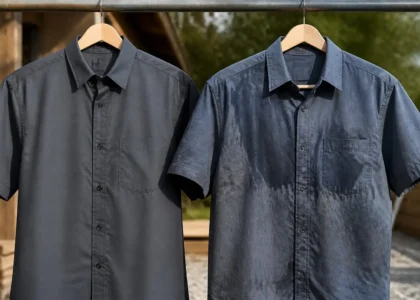
Cotton can feel soft and cool for the first few minutes of a shift, but once it’s soaked with sweat it stays wet and heavy for the rest of the day. A performance work shirt is built to keep doing its job hour six just as well as hour one. That’s why moisture-wicking, quick-drying construction shows up again and again in workwear designed specifically for summer work conditions.
What Makes a Work Shirt Good for Hot Weather?
Several features work together to make a shirt genuinely comfortable in heat. No single feature does all the work a shirt that’s lightweight but doesn’t breathe still traps heat, and a shirt that wicks moisture but fits too tight will still leave you sweating through your shift.
Lightweight Fabric
A lighter fabric means less heat retention and less fatigue over a long shift. Heavy cotton twill or thick blends add extra warmth that isn’t useful once the temperature climbs. Lightweight construction reduces the overall heat load on the body, which matters most for anyone doing physical labor rather than sitting still.
Breathability
Breathable fabric lets air pass through the weave or knit instead of trapping it against the skin. A shirt that traps heat and sweat can become uncomfortable during a long outdoor shift, especially once the sun is directly overhead. Open-knit performance fabrics allow more airflow than tightly woven cotton, which is one reason athletic and work-specific shirts have moved toward engineered polyester weaves.
Moisture-Wicking Performance
Moisture-wicking fabric pulls sweat away from the skin through capillary action and spreads it across a wider surface area of the shirt, where it can evaporate faster. This doesn’t lower body temperature directly it supports the body’s own cooling process by helping sweat evaporate instead of pooling against the skin. For workers doing physical labor outdoors, that difference is noticeable by the third or fourth hour of a shift.
Quick-Drying Fabric
Wicking moisture away from the body only helps if the fabric can also release that moisture into the air quickly. A shirt that pulls sweat to the surface but takes a long time to dry will still feel damp. Quick-drying fabric finishes the job the wicking process starts, which is part of why polyester and polyester blends outperform cotton in sustained heat.
Comfortable Fit and Mobility
Fit affects both comfort and performance. A shirt that’s too tight increases skin contact and traps heat; one that’s too loose can reduce how effectively the fabric wicks moisture where it’s needed most, like the back and underarms. A relaxed, athletic fit that allows full range of motion for bending, reaching, and lifting works best for physical jobs.
UV/UPF Protection for Outdoor Work
Workers who spend full shifts in direct sun benefit from shirts built with sun protection in mind. Some performance fabrics are constructed or treated to reduce UV exposure, which adds value for landscaping, roofing, pressure washing, and other outdoor trades. This is a genuinely useful feature for long-sleeve outdoor shirts in particular, since sleeve coverage combined with UV-conscious fabric gives more consistent protection than sunscreen alone.
Durability for Daily Work
A hot-weather shirt still has to survive daily wear: repeated washing, sweat, sun exposure, and the physical demands of the job itself. Reinforced stitching and fade-resistant fabric matter as much in summer as any other season, because a shirt that breaks down after a few months of heavy use isn’t actually saving anyone money or time.
What Is the Best Work Shirt Material for Hot Weather?
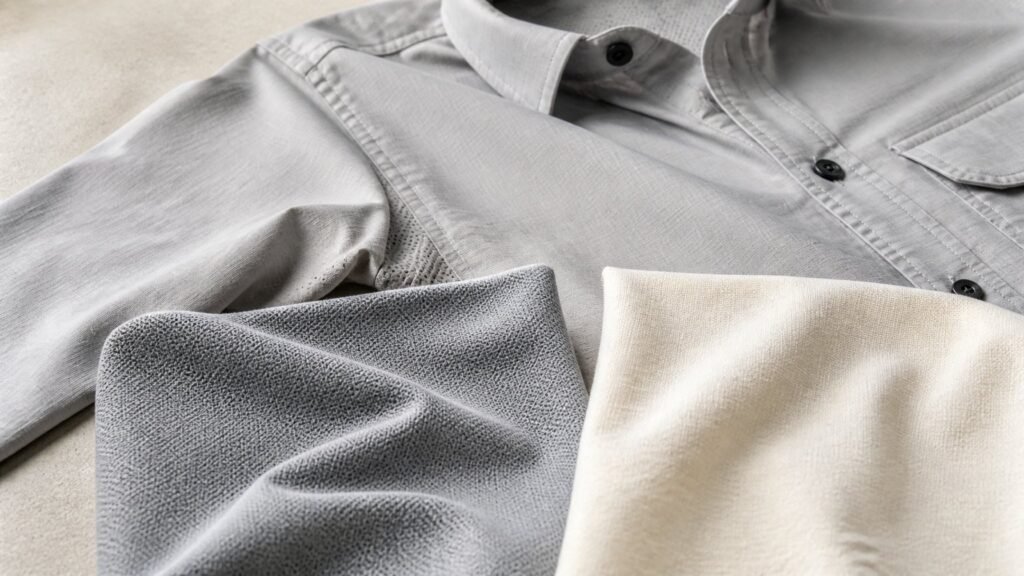
There isn’t one fabric that wins in every situation the best material depends on activity level, humidity, sun exposure, and how much durability the job demands. Performance polyester generally performs best for physically demanding outdoor work, while cotton can still be a reasonable choice for lighter, less sweat-intensive tasks.
| Material | Breathability | Moisture Management | Drying Speed | Durability | Best For |
| 100% Polyester (performance/Dri-Fit style) | High (engineered weave) | Excellent wicks sweat away | Fast | High | Outdoor labor, high sweat, frequent washing |
| 100% Cotton | Moderate (drops once wet) | Poor absorbs and holds sweat | Slow | Medium | Light activity, mild/dry conditions |
| Cotton-Poly Blends | Moderate to good | Fair to good, depending on ratio | Moderate | Medium-High | Workers who want cotton’s feel with some performance benefit |
| Lightweight Technical Fabrics | High | Very good | Fast | High | Long outdoor shifts, extreme heat, high humidity |
As the comparison shows, no fabric is perfect for every scenario humidity, sweat volume, and job type all shift the calculation. A crew doing occasional light outdoor work in a dry climate may be fine in a cotton-poly blend, while a landscaping or pressure-washing crew working full eight-hour shifts in direct sun is usually better served by lightweight summer work shirts built specifically around moisture management.
Polyester vs. Cotton Work Shirts for Hot Weather
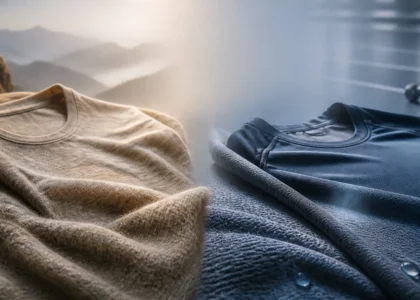
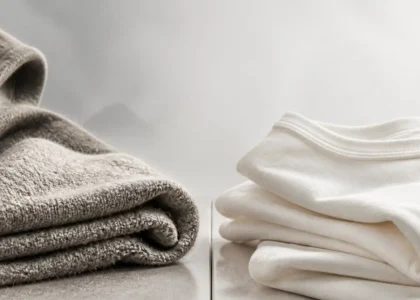
For hot-weather physical work, polyester generally outperforms cotton because it wicks sweat instead of absorbing it, dries faster, and holds up better to repeated washing. Cotton can feel cooler and softer at rest, but that advantage fades once sweat is involved.
The difference comes down to how each fiber handles moisture. Cotton is absorbent by nature it’s part of what makes it comfortable against the skin when dry, but it’s also why a soaked cotton shirt clings to the body and stays heavy for hours. Polyester fibers don’t absorb water the same way; instead, they move moisture along the fiber surface toward the outer layer of the fabric, where airflow can evaporate it more efficiently.
Durability follows a similar pattern. Polyester resists shrinking, fading, and fiber breakdown even after frequent washing, while cotton fibers weaken faster with repeated laundering, heat exposure, and chemical contact. For businesses buying uniforms in bulk, that durability gap adds up across dozens of wash cycles over a season.
For a full side-by-side breakdown of comfort, breathability, odor, and how each fabric holds up to chemicals like bleach, BRS’s polyester vs. cotton work shirts guide covers the comparison in more depth. In short: cotton isn’t a bad fabric, but for outdoor jobs involving sustained sweat and sun, polyester tends to be the more practical daily-wear choice.
T-Shirts vs. Long-Sleeve Work Shirts for Hot Weather
Both styles have a place in hot-weather workwear the right choice depends on sun exposure, job hazards, and personal preference rather than one style being universally “cooler.”
Best Work T-Shirts for Hot Weather
A lightweight, moisture-wicking T-shirt is often the simplest option for jobs with heavy physical exertion and less direct sun exposure risk, or for workers who prefer maximum arm mobility and airflow. T-shirts are also the easiest style to keep genuinely breathable, since there’s less fabric overall holding heat close to the body.
Best Long-Sleeve Work Shirts for Hot Weather
Long sleeves aren’t automatically hotter if the fabric itself is lightweight and breathable. In fact, long sleeves can offer real advantages for workers who need more coverage from direct sun, brush, debris, or job-site hazards provided the shirt is built from a fabric that manages sweat and allows airflow rather than a heavy, non-breathable material. It’s a genuine trade-off: more skin coverage in exchange for slightly more fabric against the body, which is why fabric choice matters more for long sleeves than for short sleeves.
Best Lightweight Long-Sleeve Work Shirts for Hot Weather
For workers who need long-sleeve coverage but can’t afford to overheat, the fabric and construction do most of the work. A good lightweight long-sleeve work shirt combines an engineered, breathable weave with moisture-wicking performance, so the extra sleeve coverage doesn’t come at the cost of comfort.
This combination matters most for outdoor trades where sun exposure is a daily reality landscaping, roofing, pressure washing, and construction crews often choose long sleeves specifically for that reason, as long as the shirt is genuinely lightweight rather than a standard heavyweight long-sleeve cut. Loose-but-not-baggy fits also help here, since they let air circulate along the arms instead of trapping heat against the skin.
Best Outdoor Work Shirts for Hot Weather
Workers who spend the bulk of their shift outside face a slightly different set of demands than someone moving between indoor and outdoor environments. Direct sunlight, sustained sweat, humidity, and constant movement all compound over a full shift.
For outdoor-heavy jobs, prioritize:
- Moisture management that keeps working for hours, not just the first stretch of the shift
- UV-conscious fabric for anyone in direct sun for most of the day
- Durability that can handle dirt, brush, and repeated exposure to the elements
- Breathable construction that doesn’t trap heat during high-exertion tasks
BRS’s lightweight work shirts are built around this exact combination engineered to reduce bulk while maintaining airflow for people on their feet all day.
Best Work Shirts for Different Jobs in Hot Weather
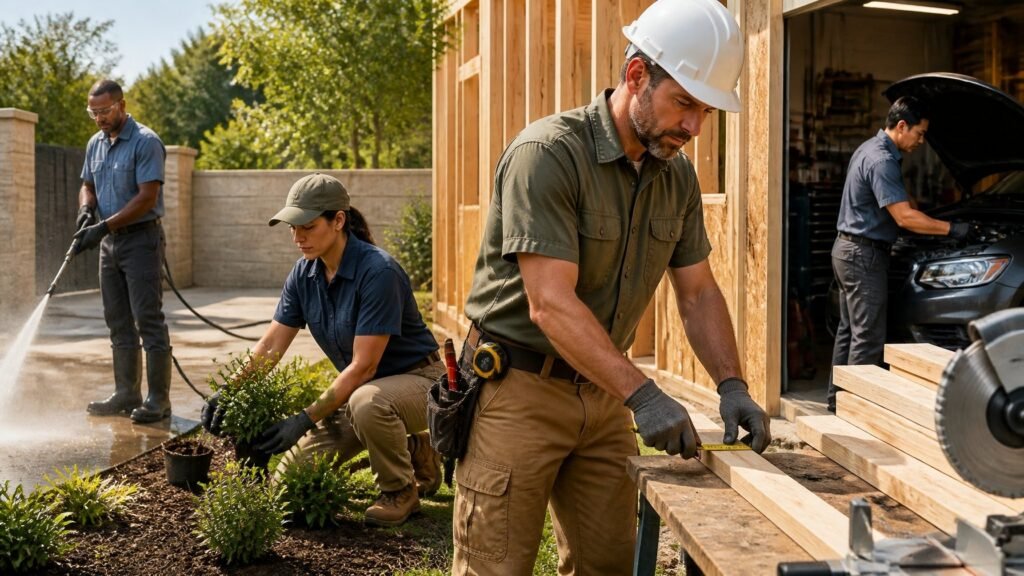
Construction Workers
Construction work combines heat, constant movement, and heavy physical exertion, often on job sites with little to no shade. A moisture-wicking, lightweight shirt reduces fatigue over a long shift, while durable stitching holds up to the wear and tear that comes with climbing, lifting, and working around tools and materials. Where visibility matters roadside work, active job sites, low-light hours high-visibility fabric adds a safety layer on top of comfort. BRS offers dedicated construction work shirts and hi-vis workwear built for these conditions.
Landscaping and Lawn Care Workers
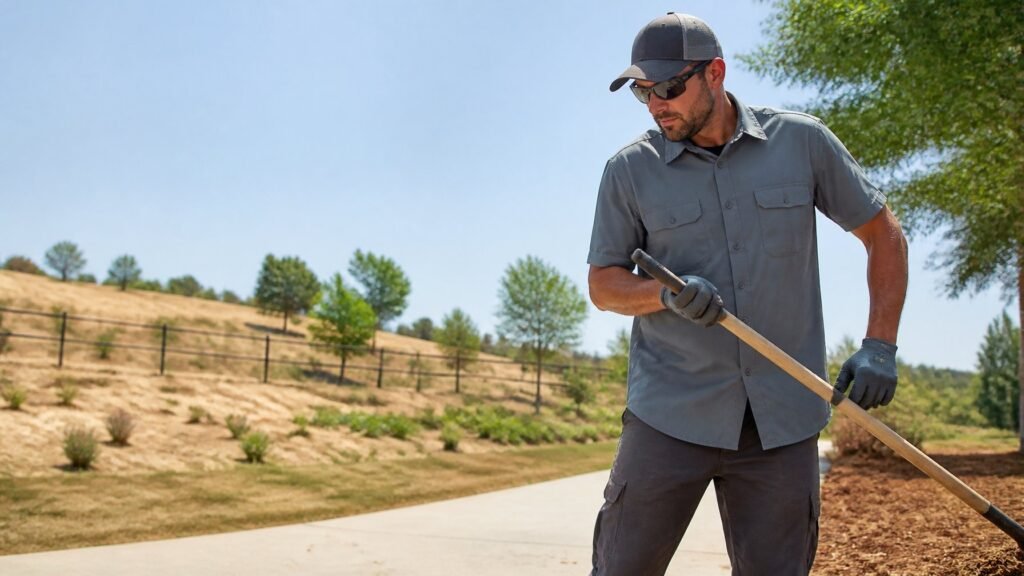
Landscaping and lawn care crews deal with prolonged sun exposure, constant movement, and physical exertion for hours at a time, often while handling dirt, grass clippings, and chemical sprays. A lightweight, moisture-wicking shirt helps reduce the heavy, soaked feeling that builds up over a long workday, and UV-conscious fabric adds protection for crews in direct sun from morning to afternoon. BRS’s landscaping shirts and lawn care shirts are built specifically around heat, sweat, and outdoor durability.
Pressure Washing Workers
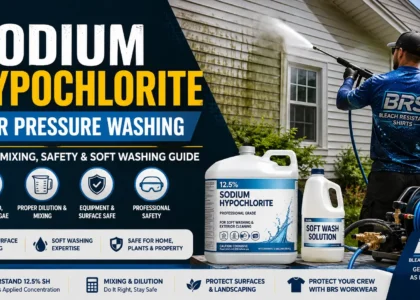
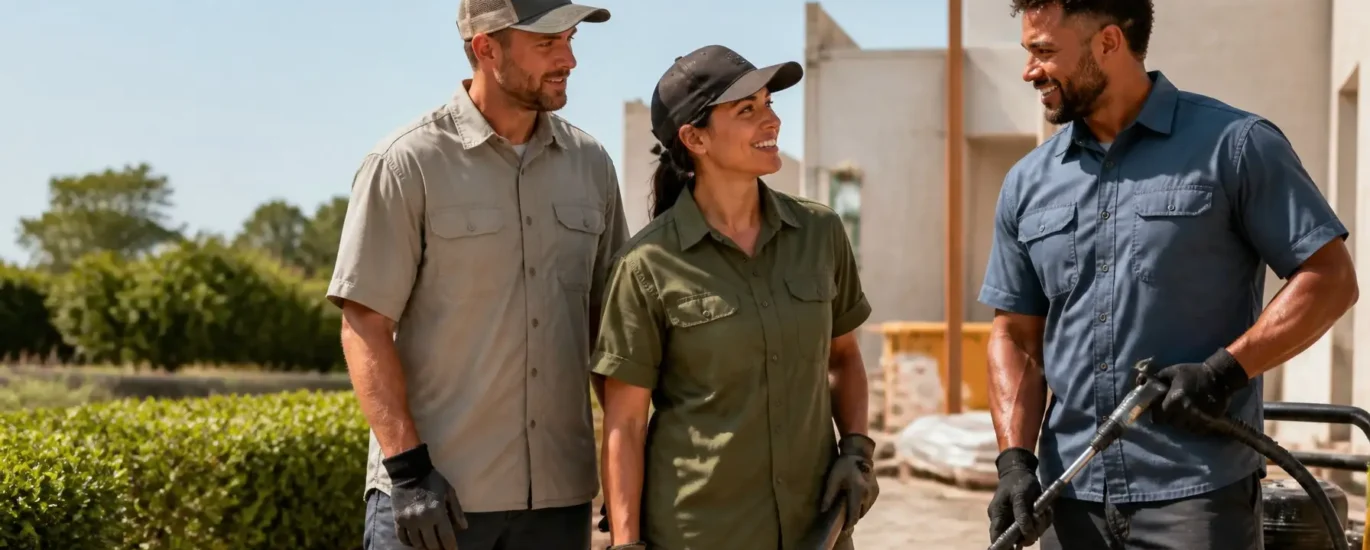
Pressure washing adds water exposure and chemical contact including bleach and other cleaning solutions on top of outdoor heat and physical movement. That combination means moisture-wicking comfort matters just as much as chemical resistance; a shirt that manages sweat well but breaks down quickly from bleach exposure isn’t built for the job. BRS’s pressure washing shirts are built to be bleach resistant not bleach proof while staying lightweight and moisture-wicking for long, hot shifts.
Automotive and Mechanic Workers
Garage environments can trap heat, especially without strong airflow, and mechanics deal with constant physical movement along with grease and fluid stains. A breathable, durable shirt helps regulate comfort in a hot bay while holding up to daily staining and washing. BRS’s automotive work shirts and custom mechanic shirts are designed around exactly these conditions.
Warehouse and Other Outdoor-Service Workers
Warehouse staff and other outdoor-service crews delivery, moving, seasonal installation work often deal with heat that builds up indoors without much airflow, combined with physical movement and long shifts. Lightweight, breathable shirts help here just as much as they do for fully outdoor jobs, since heat stress doesn’t require direct sun to be a problem. BRS’s custom warehouse uniforms are built with the same lightweight, moisture-wicking approach.
Best Work Shirt Styles for Hot Weather
| Style | What It Offers | Best For |
| T-Shirt | Maximum breathability, simplest fit, easiest movement | High-exertion jobs, casual work environments |
| Polo | Professional appearance with performance fabric benefits | Customer-facing roles, branded uniform programs |
| Long-Sleeve Work Shirt | Extra sun and debris coverage when fabric is lightweight | Landscaping, roofing, extended outdoor sun exposure |
| Hi-Vis Shirt | Visibility plus moisture management | Roadside, construction, low-light or active job sites |
| Quarter-Zip / Button Performance Shirt | Adjustable neckline for airflow control | Variable conditions, workers who move between heat levels |
BRS offers most of these styles across its uniform lines including round neck, V-neck, polo, and polo quarter-zip options in both short and long sleeve so businesses can standardize on one fabric performance level while choosing the style that fits each role.
What Should You Wear to Work When It’s Hot?
Start with a lightweight, moisture-wicking shirt, then build the rest of the outfit around the same priorities: breathability, sun protection, and comfort during movement. The shirt does the most work for upper-body comfort, but a few other choices round out a genuinely heat-ready outfit.
Beyond the shirt itself, consider:
- Lightweight, breathable pants that allow airflow without sacrificing durability for the job
- Moisture-wicking or breathable socks to reduce foot discomfort during long shifts
- Appropriate footwear rated for the job’s safety requirements without adding unnecessary heat
- Sun protection such as a hat or neck coverage for anyone in direct sun most of the day
- Hydration throughout the shift, not just during breaks
- Required PPE, since safety gear should never be skipped for comfort, even in extreme heat
The shirt is the foundation, but heat management works best as a full-outfit approach rather than relying on one piece of gear to do everything.
How to Choose the Best Work Shirt for Your Climate
Dry Heat
In dry heat, breathability and lightweight construction do most of the work, since sweat evaporates relatively quickly even without advanced wicking technology. A basic lightweight, breathable shirt performs well here.
Hot and Humid Conditions
Humidity slows evaporation, which means moisture-wicking performance matters far more than in dry climates. A shirt that pulls sweat away from the skin and spreads it across a wider surface helps compensate for the air’s reduced ability to absorb moisture on its own.
Direct Sunlight
For jobs spent mostly in direct sun, prioritize UV-conscious fabric and consider long sleeves if the shirt is genuinely lightweight. Lighter colors also tend to reflect more heat than dark colors, which is worth factoring into uniform color choices for outdoor crews.
Long Outdoor Shifts
The longer the shift, the more moisture-wicking and quick-drying performance compound in value. A shirt that performs fine for two hours can feel very different by hour seven, so durability and sustained comfort matter more than initial feel.
Physically Demanding Work
High-exertion jobs generate more sweat, faster. Prioritize fit not too tight, not too loose along with strong moisture-wicking performance, since the body’s cooling system is working overtime during heavy lifting, climbing, or repetitive physical tasks.
Common Mistakes When Choosing Work Shirts for Hot Weather
- Choosing overly heavy fabrics that add unnecessary heat load, even if they seem more durable on paper
- Ignoring moisture management and picking a shirt based on look alone
- Choosing poor-fitting shirts that are too tight (trapping heat) or too loose (reducing wicking effectiveness)
- Focusing only on price and ending up replacing cheap shirts more often, which costs more over time
- Ignoring durability and picking fabric that breaks down quickly under sun, sweat, and repeated washing
- Ignoring sun exposure for workers who spend most of the day outdoors
- Choosing a shirt that stays wet too long, which increases discomfort and chafing during long shifts
- Choosing style over job requirements a great-looking shirt that doesn’t hold up to the actual work isn’t the right choice
What We Look For in Hot-Weather Workwear
After years of building custom uniforms for crews working outdoors pressure washing, landscaping, lawn care, and automotive teams among them a few practical criteria come up again and again when evaluating whether a shirt actually works for hot-weather labor:
- How it feels within the first hour of movement, not just when it’s new out of the packaging
- Whether moisture actually moves away from the skin, or just sits on the surface of the fabric
- How the fabric holds up after repeated washing, since a shirt that degrades after a few weeks isn’t a real solution for daily wear
- Whether the fit allows full range of motion for bending, reaching, and lifting without restriction
- How it performs specifically for the job it’s built for a pressure washing crew and an office polo have very different real-world demands, even if both need to survive summer heat
There’s no substitute for matching the fabric and cut to the actual job. That’s the thinking behind BRS’s job-specific uniform lines rather than a single generic “summer shirt” for every industry.
Why BRS Work Shirts Can Be a Good Option for Hot-Weather Work
BRS builds its work shirts around 100% polyester Dri-Fit style materials, which are engineered for moisture-wicking performance and breathability rather than absorbency. That fabric choice is the same reason polyester outperforms cotton for sustained physical work in heat it’s designed to move sweat away from the body instead of holding onto it.
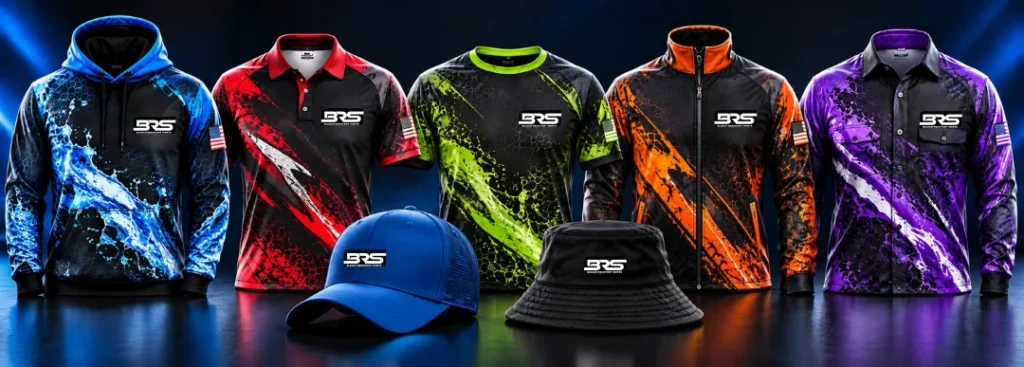
Every shirt is customizable with a business’s logo, colors, and branding through dyed sublimation printing, which keeps designs vibrant without the peeling or cracking that can happen with lower-quality printing methods. Sizing runs from 2T to 5XL across men’s, women’s, and kids’ cuts, so crews of any size can be outfitted consistently. There’s no minimum order quantity, which means a solo operator can order one shirt just as easily as a business outfitting a full team.
It’s worth being precise here: BRS shirts are bleach resistant — not bleach proof. That distinction matters for crews working around cleaning chemicals, since it means the fabric is built to withstand bleach exposure better than standard cotton or untreated polyester, not that it’s immune to damage under any condition.
For teams comparing options, BRS offers job-specific lines including summer work shirts, UV-protection work shirts, and industry-specific uniforms for pressure washing, landscaping, lawn care, and automotive work built around the same lightweight, moisture-wicking foundation rather than a one-size-fits-all approach.
Frequently Asked Questions
What is the best work shirt for hot weather?
The best work shirt for hot weather is a lightweight, moisture-wicking shirt made from performance polyester or a polyester blend. These fabrics pull sweat away from the skin, dry quickly, and stay comfortable through long, physically demanding shifts better than cotton.
What is the best material for work shirts in hot weather?
Performance polyester is generally the best material for hot-weather work shirts because it wicks moisture, dries fast, and resists shrinking and fading through repeated washing. Cotton can work for lighter activity in mild conditions but struggles once heavy sweat is involved.
Are polyester work shirts good for hot weather?
Yes. Polyester’s engineered fiber structure moves sweat away from the body instead of absorbing it, which helps the fabric feel drier and lighter during physical activity compared to cotton, especially in hot or humid conditions.
Are moisture-wicking work shirts worth it?
Generally, yes, for anyone doing physical work in heat. Moisture-wicking shirts don’t lower body temperature directly, but they support the body’s natural cooling process by helping sweat evaporate faster, which noticeably improves comfort during long outdoor shifts.
Are long-sleeve work shirts good for hot weather?
Long-sleeve shirts can work well in hot weather if the fabric is lightweight and breathable. They offer additional sun and debris protection, which is valuable for outdoor trades, but a heavy, non-breathable long-sleeve shirt will feel hotter than a lightweight short-sleeve alternative.
What are the best work shirts for working outside in heat?
The best shirts for working outside in heat combine moisture-wicking fabric, lightweight construction, breathability, and some form of UV protection. Job-specific features like bleach resistance for pressure washing or hi-vis fabric for roadside work add further value depending on the trade.
What should construction workers wear in hot weather?
Construction workers in hot weather benefit from lightweight, moisture-wicking shirts that allow full range of motion, along with hi-vis fabric where visibility is required on active job sites. Durable stitching matters too, given the physical demands of the job.
What should landscaping workers wear in hot weather?
Landscaping workers should look for lightweight, breathable, moisture-wicking shirts with UV-conscious fabric, since the job typically involves hours of direct sun exposure combined with constant physical movement.
What is the best work shirt for hot and humid weather?
In hot, humid weather, moisture-wicking performance matters more than in dry heat, since humidity slows natural sweat evaporation. A lightweight polyester shirt that actively moves moisture away from the skin performs better than cotton in these conditions.
Are lightweight work shirts durable enough for daily work?
Well-constructed lightweight work shirts can be plenty durable for daily work. Fabric weight and durability aren’t the same thing reinforced stitching, quality fibers, and fade-resistant printing matter more than sheer fabric thickness.
What is the difference between a breathable shirt and a moisture-wicking shirt?
A breathable shirt allows air to pass through the fabric, which helps release heat and moisture. A moisture-wicking shirt actively pulls sweat away from the skin toward the fabric’s surface. The two features often work together, but a shirt can be breathable without wicking moisture effectively, or vice versa.
What should you look for in a summer work shirt?
Look for lightweight, moisture-wicking, breathable fabric with a comfortable fit that allows full movement, along with durability for repeated washing and, for outdoor jobs, some form of UV protection.