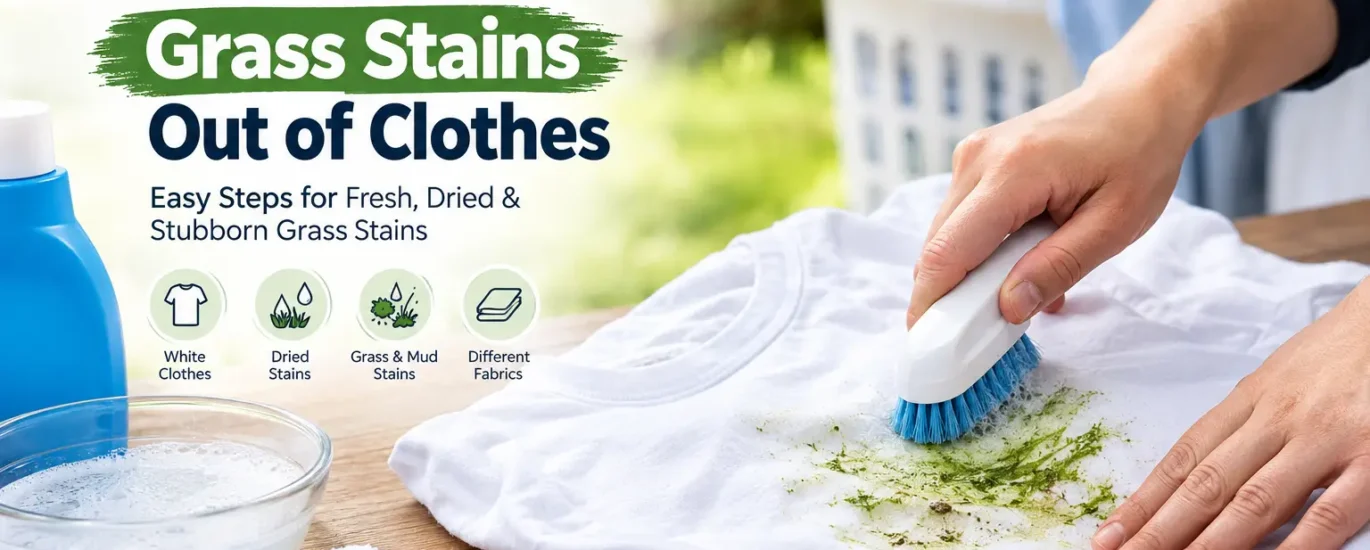
Grass stains can turn your favorite shirt, jeans, or work uniform into a laundry challenge in seconds. Whether you picked up green marks while mowing the lawn, playing sports, gardening, or working outdoors, the good news is that many grass stains can be removed with the right treatment.
The key is to treat the stain before washing, use a suitable laundry detergent, and avoid heat until the green discoloration is gone.
In this guide, you’ll learn how to get grass stains out of clothes, how to treat white garments, what to do when a stain has already dried, and how to remove a combination of grass and mud without damaging your fabric.
Quick Answer: How Do You Get Grass Stains Out of Clothes?
To remove grass stains from most washable clothes, gently remove loose grass and dirt, apply a liquid enzyme laundry detergent or enzyme-based stain remover, and leave it on for the time recommended on the product label. Wash the garment at the warmest temperature permitted by its care label, then check the stain before drying.
If a green mark remains, repeat the treatment or use a fabric-safe oxygen bleach if the garment allows it. Avoid putting stained clothes in a tumble dryer because heat can make remaining stains harder to remove.
Why Are Grass Stains So Difficult to Remove?
Grass stains are more than ordinary dirt. They contain chlorophyll, the natural green pigment found in plants, along with plant residues and sometimes soil. When grass is pressed into clothing, these materials can cling to the fabric fibers.
The challenge becomes greater when you slide across a lawn, kneel on wet grass, or allow a stained garment to sit for several hours.
Different stain components require different approaches:
- Chlorophyll: The green pigment responsible for the visible mark.
- Plant residues: Organic material that can cling to fabric.
- Soil and mud: Dirt particles that may become trapped in the weave.
- Heat and time: These can make some stains more difficult to remove.
This is why a regular wash may fade a grass stain without completely eliminating it. Pretreatment gives the cleaning product time to work before the main wash.
What You’ll Need to Remove Grass Stains
Before you begin, gather a few basic laundry supplies:
- Liquid enzyme laundry detergent or an enzyme-based stain remover.
- Cool or lukewarm water, as appropriate for the fabric.
- A clean white cloth or soft-bristled brush.
- A washing machine, if the garment is machine washable.
- Oxygen-based bleach, if needed and permitted by the care label.
- A clean towel for blotting.
You don’t necessarily need every item. For a fresh grass stain, enzyme detergent and careful washing may be enough.
Always check the garment’s care label before using a cleaning product. Test stain removers on a hidden area first, particularly on colored garments, printed clothing, and delicate materials.
How to Get Grass Stains Out of Clothes: Step-by-Step
Follow these steps for most washable cotton, denim, polyester, and cotton-blend garments.
Step 1: Remove Loose Grass and Dirt
Start by checking whether the stain contains dried grass, soil, or mud.
Gently brush away loose debris with your fingers or a soft brush. Avoid scrubbing aggressively because friction can push the stain deeper into the fabric or damage the fibers.
If the garment is covered in wet mud, let the mud dry enough to brush away easily before treating the remaining mark.
Step 2: Pretreat the Grass Stain
Apply a small amount of liquid enzyme laundry detergent or a suitable enzyme stain remover directly to the stained area.
Gently work the product into the fabric using your fingertips or a soft brush. Follow the product’s directions for how long it should remain on the garment.
Enzyme detergents are useful because certain enzymes help break down organic residues that ordinary washing may not remove effectively.
Avoid using a stiff brush or rubbing the fabric too hard, especially on lightweight shirts and athletic clothing.
Step 3: Let the Detergent Work
Give the pretreatment enough time to work according to the manufacturer’s instructions.
Older or heavily marked stains may need a longer treatment or more than one attempt. However, leaving a product on longer than recommended does not necessarily improve results and may damage sensitive fabrics.
For garments with stubborn stains, a presoak may also help if the detergent and care label allow it.
Step 4: Wash According to the Care Label
Wash the garment using a suitable laundry detergent and the warmest water temperature allowed by its care label.
Do not assume that hotter water is always better. Some fabrics and stain types can be damaged by excessive heat, while certain garments require cooler washing.
If you’re treating a printed shirt, polyester sportswear, or a custom uniform, follow its specific washing instructions rather than using a one-temperature-fits-all approach.
Step 5: Inspect the Stain Before Drying
Once the wash cycle finishes, examine the stained area in good lighting.
If the green mark has disappeared, you can dry the garment according to its care instructions.
If the stain remains, repeat the pretreatment and washing process. You may also consider a fabric-compatible oxygen-based stain remover.
Important: Do not tumble-dry or iron the garment while the stain is still visible. Heat can make remaining discoloration more difficult to remove.
How to Get Grass Stains Out of White Clothes
Grass stains can be especially noticeable on white T-shirts, polo shirts, school uniforms, and workwear. Fortunately, many fresh stains respond well to prompt pretreatment.
Here’s how to get grass stains out of white clothes without unnecessarily damaging the fabric.
- Brush away any loose grass or dirt.
- Apply enzyme laundry detergent directly to the green mark.
- Allow it to work according to the product instructions.
- Wash the garment at the warmest temperature permitted by its care label.
- Check the stain before drying.
- If discoloration remains, consider an oxygen-based bleach specifically labeled as suitable for the garment.
Oxygen bleach can help with residual discoloration on compatible fabrics, but it is not suitable for every material or finish. Follow the product instructions carefully.
Do not automatically use chlorine bleach simply because the garment is white. Chlorine bleach can damage some fibers, affect finishes, and cause unexpected discoloration. Never mix chlorine bleach with vinegar, ammonia, or other cleaning products.
For white garments made from delicate fabrics, or items labeled dry-clean only, consult a professional cleaner instead of experimenting with household treatments.
How to Get Grass Stains Out of Clothes After Drying
If you’ve already washed and dried a grass-stained shirt, don’t give up just yet. A dried stain can be more stubborn, but it may still be possible to reduce or remove it.
The best approach depends on whether the stain simply dried naturally or was exposed to the heat of a tumble dryer or iron.
1. Brush Away Any Remaining Residue
If the stain contains dried grass or dirt, gently remove loose material before applying a cleaning product.
Avoid scraping the fabric with sharp objects or rubbing it vigorously.
2. Apply an Enzyme-Based Stain Remover
Treat the affected area with an enzyme laundry detergent or a suitable stain remover.
Follow the product’s instructions and allow enough time for the pretreatment to work. A presoak may be helpful for compatible, washable garments.
3. Wash and Inspect Again
Wash the garment according to its care label, then inspect the stain before drying.
If the green mark remains, repeat the treatment rather than immediately escalating to a harsh chemical.
4. Consider an Additional Fabric-Safe Treatment
For white or colorfast garments that can tolerate it, an oxygen-based stain remover may help lift residual discoloration.
Always check the garment label, the cleaning product label, and colorfastness before proceeding.
Older stains may require multiple attempts, and complete removal is not guaranteed, especially if the stain has been exposed to repeated high heat.
The most important rule is simple: keep the garment out of the dryer until the stain is gone or you’ve decided that no further safe treatment is appropriate.
How to Get Grass and Mud Stains Out of Clothes
Grass and mud often appear together after gardening, sports, hiking, lawn maintenance, or outdoor work. Treating both substances at once can spread the dirt and make cleaning more difficult.
Use this process to remove grass and mud stains from washable clothes.
Step 1: Let Wet Mud Dry
Resist the urge to wipe wet mud across the garment. Allow it to dry enough to be removed without smearing.
Once dry, gently brush off the loose soil.
Step 2: Pretreat the Grass Marks
After removing the loose mud, apply an enzyme laundry detergent or suitable stain remover to the remaining green marks.
Work gently and follow the product’s recommended treatment time.
Step 3: Treat Remaining Soil
If a brown dirt mark remains, use a laundry detergent or stain remover suitable for the garment and the type of soil involved.
For stubborn mud stains, a compatible presoak may help loosen particles trapped in the fibers.
Step 4: Wash the Garment
Wash according to the care label, using an appropriate detergent and water temperature.
If the garment is heavily soiled, avoid mixing it with delicate or lightly colored clothing until the loose dirt has been removed.
Step 5: Check Before Drying
Inspect both the green grass mark and the brown mud mark after washing. Repeat the appropriate treatment if either remains.
Do not assume that removing the visible mud means the grass pigment has also disappeared.
How to Remove Grass Stains From Different Fabrics
Not every fabric responds to stain treatment in the same way. The safest method depends on the garment’s fibers, color, finish, and care instructions.
Cotton and Cotton Blends
Cotton T-shirts, jeans, and many everyday garments can often be treated with enzyme detergent and machine-washed according to their care labels.
Pretreating before washing is particularly important for concentrated green marks.
Polyester and Athletic Clothing
Polyester is commonly used in sportswear, moisture-wicking shirts, and custom sublimation-printed garments.
Apply a suitable detergent, treat the stain gently, and follow the garment’s washing instructions. Avoid assuming that all polyester shirts can tolerate the same chemicals or temperatures.
For printed garments, aggressive scrubbing and incompatible stain removers may affect the appearance of the print.
Denim and Jeans
Grass stains on jeans often occur around the knees, cuffs, and seat.
Brush away loose soil, pretreat the green mark, and wash according to the denim’s care label. Check the stain before drying because heat may make remaining discoloration harder to remove.
White Shirts and Polo Shirts
Use enzyme detergent first and consider an appropriate oxygen-based treatment if a mark remains.
For shirts with colored logos, decorative prints, or mixed fabrics, check the entire garment’s care instructions rather than treating the white fabric in isolation.
Delicate Fabrics
Wool, silk, rayon, and other delicate materials may require a gentler method than ordinary cotton clothing.
Avoid aggressive brushing, strong solvents, and unapproved bleaching products. If the garment is labeled dry-clean only, take it to a professional cleaner and explain what caused the stain.
Common Mistakes to Avoid When Removing Grass Stains
Even a good stain remover may fail if the garment is treated incorrectly. Avoid these common mistakes.
1. Putting the garment straight into the dryer
Heat can make remaining stains more difficult to remove. Inspect the fabric after washing and before drying.
2. Scrubbing too aggressively
Hard scrubbing can damage fibers, distort the fabric, or spread the stain. Gentle pretreatment is usually a better starting point.
3. Washing without pretreatment
A standard wash may not fully remove the green pigment. Pretreating first gives the detergent a better chance to work.
4. Using chlorine bleach on every white garment
White does not automatically mean bleach-safe. Check the care label and use only products compatible with the fabric.
5. Mixing cleaning chemicals
Never mix chlorine bleach with vinegar, ammonia, or other household cleaners. Dangerous fumes or chemical reactions can result.
6. Ignoring the garment’s care instructions
A cleaning method suitable for cotton may be inappropriate for delicate fibers or printed polyester clothing.
7. Giving up after one wash
Older grass stains may need repeated, fabric-safe treatment. If the stain persists, repeat the process or seek professional advice rather than immediately using a stronger chemical.
How to Prevent Grass Stains on Work Shirts and Outdoor Clothing
If you regularly work outdoors, a few simple habits can help reduce the time spent treating stains.
- Wear clothing suited to your working environment.
- Follow the care instructions for your work shirts and uniforms.
- Treat grass and dirt marks as soon as practical.
- Keep a suitable stain remover available for washable workwear.
- Brush away loose mud before washing.
- Separate heavily soiled clothing when necessary.
- Inspect garments after washing before putting them in the dryer.
- Avoid using chemicals on uniforms unless both the garment and product labels permit them.
For pressure washing, landscaping, gardening, and exterior cleaning crews, choosing appropriate workwear is also important for comfort, appearance, and ease of care.
If you need branded uniforms, explore our custom workwear and uniform options to find apparel suited to your business and working conditions.
Remember that bleach-resistant clothing is not the same as bleach-proof or chemical-protective clothing. Follow garment care instructions and workplace chemical-safety requirements, and never assume a shirt provides personal protective equipment.
Frequently Asked Questions
How do you get grass stains out of clothes quickly?
Remove loose grass, pretreat the stain with enzyme laundry detergent, and wash the garment according to its care label. Inspect the fabric before drying and repeat the treatment if necessary.
How do you get grass stains out of white clothes without chlorine bleach?
Start with enzyme detergent and wash according to the garment’s care instructions. If a green mark remains, an oxygen-based stain remover labeled as suitable for the fabric may help. Test first and avoid heat until the stain is gone.
Can grass stains come out after drying?
Yes, many dried grass stains can still be treated. Apply an appropriate enzyme stain remover, follow the product instructions, and wash the garment again. Stains exposed to high dryer heat may be more difficult to remove and may require repeated treatment.
How do you get grass and mud stains out of clothes?
Let wet mud dry enough to brush away, remove loose soil, pretreat the grass marks, and wash the garment according to its care label. Check for both green and brown discoloration before drying.
Does regular laundry detergent remove grass stains?
It may remove light stains, but enzyme-based detergent or a suitable stain remover is often a better starting point for stubborn grass marks. Always follow the product instructions.
Should you use hot or cold water on grass stains?
Start with a fabric-appropriate pretreatment and use the warmest wash temperature allowed by the garment’s care label. Avoid excessive heat and never dry the garment until the stain has been checked.
Does vinegar remove grass stains?
Vinegar is not a universally reliable treatment for grass stains. A suitable enzyme detergent is a better first step for most washable garments. Avoid experimenting with vinegar on delicate or printed fabrics, and never mix it with chlorine bleach.
Can grass stains permanently damage clothes?
Not always. Many grass stains can be removed or significantly reduced, particularly when treated promptly. However, some stains may become difficult or impossible to remove after prolonged exposure or repeated high heat.
Final Thoughts
Grass stains may look stubborn, but the right treatment can make a real difference. Remove loose dirt, pretreat with a suitable enzyme detergent, wash according to the care label, and check the garment before drying.
Whether you’re cleaning white shirts, sportswear, jeans, or everyday work uniforms, patience and fabric-safe products are more useful than aggressive scrubbing or harsh chemicals.
Treat stains early whenever possible, repeat safe treatments when necessary, and always prioritize the garment’s care instructions. With the right approach, many grass-stained clothes can be cleaned and worn again with confidence.