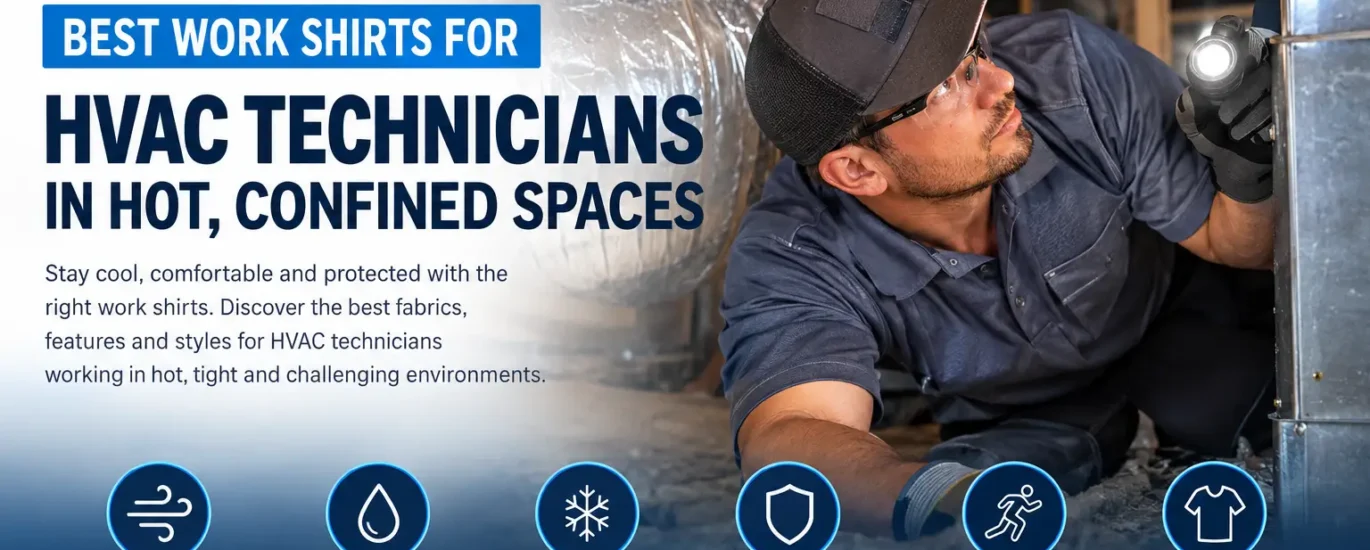
Working in HVAC means dealing with more than heating and cooling systems. Technicians may spend hours inside hot attics, cramped mechanical rooms, poorly ventilated utility areas, and tight spaces where bending, reaching, lifting, and sweating are part of the job.
In these conditions, the wrong shirt can become uncomfortable quickly. Heavy fabric may hold sweat, a restrictive fit can limit movement, and a shirt that takes too long to dry can feel damp throughout the shift.
The best work shirts for HVAC technicians in hot, confined spaces are lightweight, breathable, moisture-wicking, quick-drying, and comfortable enough for repetitive movement. However, the right choice also depends on the job’s hazards, required personal protective equipment (PPE), and whether the technician needs a professional uniform for customer-facing work.
This guide explains which fabrics and shirt features matter most, how to choose between different work shirt styles, and what HVAC companies should consider when selecting uniforms for their crews.
What Are the Best Work Shirts for HVAC Technicians in Hot, Confined Spaces?
The best option is generally a lightweight performance work shirt made from breathable, moisture-wicking fabric, with a comfortable fit that allows technicians to bend, reach, and work overhead without restriction.
Look for these features when comparing HVAC work shirts:
- Moisture-wicking fabric: Moves sweat away from the skin to support evaporation.
- Breathable construction: Allows air to circulate through the fabric.
- Quick-drying material: Helps prevent a shirt from remaining damp after heavy sweating.
- Flexible fit: Supports movement when working around ductwork, air handlers, and mechanical equipment.
- Durable construction: Holds up to frequent wear, washing, and demanding workdays.
- Practical design: Provides suitable coverage and works with the company’s uniform and PPE requirements.
- Professional appearance: Keeps technicians looking consistent when visiting homes and commercial properties.
No single shirt is best for every HVAC job. A technician servicing an outdoor condenser, for example, may need different features from someone working in a hot attic or an indoor mechanical room.
Why HVAC Technicians Need the Right Work Shirts
HVAC work often combines physical activity with challenging environmental conditions. A technician might carry equipment, climb ladders, inspect ductwork, replace components, and work in spaces with limited airflow during the same shift.
The right work shirt can improve everyday comfort, but its performance depends on the fabric, fit, workload, and surrounding conditions.
1. Hot Attics and Poorly Ventilated Areas
Attics can retain substantial heat, especially during warm weather. Technicians working around insulation, ductwork, and ventilation equipment may also have limited room to move.
A lightweight shirt with moisture-wicking properties can help manage sweat and reduce the uncomfortable feeling of wet fabric against the skin.
However, clothing alone cannot make a dangerously hot workspace safe. Employers should assess heat exposure and implement appropriate ventilation, work-rest schedules, hydration, and emergency procedures.
2. Tight Mechanical Rooms and Crawlspaces
In cramped spaces, HVAC technicians frequently bend, kneel, reach overhead, and move around pipes or equipment.
A shirt that pulls across the shoulders or rides up during movement can become distracting. Look for a cut that provides enough room through the shoulders, chest, and back without excessive fabric catching on surrounding equipment.
Smooth seams, comfortable collars, and an appropriate sleeve length can also improve comfort during extended maintenance tasks.
3. Sweat During Physically Demanding Work
Carrying tools and equipment, climbing, and working overhead increase physical exertion. When sweat accumulates in a heavy shirt, the fabric can feel sticky and uncomfortable.
Moisture-wicking work shirts help move moisture away from the skin so it can spread across the fabric and evaporate. This can improve comfort, although high humidity and poor airflow may slow evaporation.
For more information, read our guide to how moisture-wicking shirts work.
4. Frequent Washing and Daily Wear
HVAC uniforms may be exposed to dust, dirt, perspiration, and routine maintenance grime. When technicians wear the same uniform style repeatedly, durability and easy care become important considerations.
Choose shirts that can withstand regular laundering according to their care labels. Reinforced seams, quality construction, and color retention can help maintain a professional appearance over time.
What Fabric Is Best for HVAC Work Shirts?
Fabric is one of the most important factors when choosing work shirts for hot environments. Different materials offer different combinations of breathability, moisture management, durability, and comfort.
Polyester Performance Fabric
Lightweight polyester performance shirts are a strong option for technicians who sweat heavily during physically demanding work.
Polyester absorbs less moisture into its fibers than cotton and can be engineered to spread sweat across the fabric for faster evaporation. Its performance still depends on the knit, fabric weight, finishing, and garment construction.
Best for: Technicians who prioritize lightweight comfort, quick drying, and moisture management.
What to check: Breathability, fabric feel, fit, stitching quality, and whether the garment performs well during movement.
Cotton Work Shirts
Cotton is familiar, soft, and comfortable for many workers. However, it absorbs moisture and can become heavy when saturated with sweat.
A lightweight cotton shirt may work well for some duties and environments, but it may be less comfortable during long, sweaty tasks in poorly ventilated spaces.
Best for: Work environments where cotton’s feel and other garment requirements suit the task.
What to check: Fabric weight, drying time, fit, and how the shirt feels after extended wear.
Polyester-Cotton Blends
Polyester-cotton blends combine characteristics of both fibers. Depending on the blend ratio and construction, they may offer a balance of softness, durability, and moisture management.
Not every blend performs equally well in hot conditions, so check the actual garment specifications rather than relying on the fabric name alone.
Best for: Technicians looking for a balance between everyday comfort and practical workwear durability.
Quick Fabric Comparison
| Fabric type | Main advantage | Potential limitation |
| Lightweight performance polyester | Moisture management and quick drying | Breathability varies by construction |
| Cotton | Soft, familiar feel | Can hold sweat and become heavy |
| Polyester-cotton blend | Balance of comfort and durability | Performance depends on blend and fabric weight |
For a more detailed comparison, explore our guide to the best materials for HVAC shirts.
7 Features to Look for in HVAC Work Shirts
Choosing the right shirt involves more than selecting a fabric. The garment should fit the technician’s daily tasks, workplace conditions, and company uniform requirements.
1. Lightweight, Breathable Construction
Start by checking how the fabric feels and allows airflow. A lightweight shirt can reduce the amount of material holding heat against the body, but lightweight alone does not guarantee good breathability.
Look for performance fabrics designed for airflow and sustained physical activity.
2. Moisture-Wicking and Quick-Drying Performance
These features work together but are not identical.
Moisture-wicking fabric moves sweat away from the skin. Quick-drying fabric releases that moisture into the surrounding air at a suitable rate.
For HVAC technicians who work in hot attics or perform physically demanding service calls, both characteristics can help improve comfort.
3. A Fit That Allows Full Movement
Technicians need to reach above their heads, bend forward, climb, and maneuver around equipment.
Look for:
- Sufficient room across the shoulders and upper back.
- Sleeves that do not restrict arm movement.
- A comfortable body length that stays in place when reaching.
- A fit that is neither excessively tight nor unnecessarily loose.
The ideal fit should support movement without creating excess fabric that could catch on equipment.
4. Short Sleeves or Long Sleeves?
Short-sleeve shirts offer greater exposed skin and may feel comfortable during many indoor service tasks.
Lightweight long-sleeve shirts can provide additional skin coverage when working outdoors or around relevant environmental hazards. However, sleeve length should be selected according to the task, sun exposure, required protection, and employer policy.
Long sleeves are not automatically cooler or safer. When heat exposure is significant, the entire clothing and PPE combination needs to be considered.
5. Durable Seams and Construction
HVAC uniforms face frequent washing and repeated movement. Examine stitching around the shoulders, sleeves, collar, and side seams.
If the shirt will be worn daily, durability matters because damaged seams, stretched collars, and faded branding can make uniforms look worn prematurely.
6. Professional Appearance and Company Branding
HVAC technicians regularly interact with homeowners, property managers, and commercial clients. A coordinated uniform helps customers identify the service team and can create a more consistent company image.
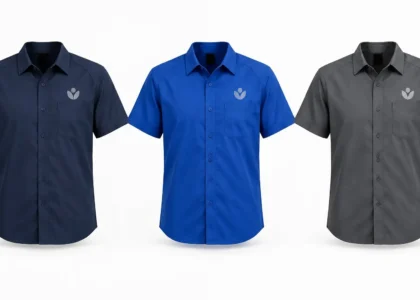
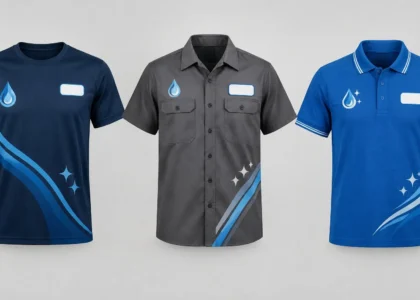
Consider shirts that accommodate your company logo, brand colors, and technician names where appropriate.
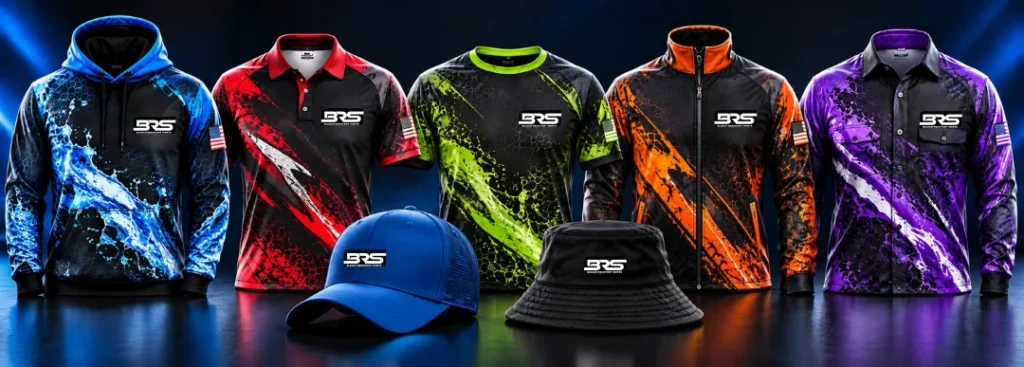
For businesses that need custom uniforms, Bleach Resistant Shirts offers custom workwear options. Review the available garment styles and confirm that the chosen product suits the team’s actual working conditions.
7. Easy Care and Color Retention
Work shirts should be practical to wash and maintain. Follow the garment’s care instructions, use appropriate detergent, and avoid washing or drying methods that may damage the fabric or printed design.
If you’re selecting custom-printed uniforms, read our guide to how sublimation printing helps create fade-resistant shirts.
Best HVAC Shirt Styles for Different Working Conditions
Different HVAC roles have different clothing requirements. Use the following comparison as a starting point rather than a universal rule.
| Work situation | Shirt features to prioritize |
| Hot attic service | Lightweight fabric, moisture management, unrestricted movement |
| Indoor mechanical room | Breathability, comfortable fit, durable construction |
| Residential service calls | Professional appearance, comfortable fabric, suitable branding |
| Outdoor condenser maintenance | Appropriate coverage, moisture management, weather-specific considerations |
| Commercial HVAC maintenance | Durability, mobility, company uniform consistency |
| Work requiring specialized PPE | Compatibility with the required protective equipment and safety procedures |
Before standardizing a shirt across an entire team, consider testing samples during representative work tasks. A shirt that feels comfortable in an office or showroom may perform differently during a full service shift.
How to Choose Custom HVAC Work Shirts for Your Team
For HVAC business owners, choosing uniforms involves more than finding a comfortable shirt for one technician. The garments should work consistently across different employees and service environments.
Consider Your Team’s Daily Tasks
List the tasks technicians perform most often. Do they primarily service residential systems, work in commercial mechanical rooms, maintain rooftop units, or install ductwork in unfinished buildings?
Understanding the work environment makes it easier to identify the right balance of breathability, durability, coverage, and mobility.
Standardize Your Uniform Appearance
Choose consistent colors, logo placement, and shirt styles so customers can recognize your team.
A professional uniform does not need to be complicated. A clean design, readable company branding, and a consistent appearance can make the crew look organized and trustworthy.
Check Sizing and Comfort Before Ordering
If multiple technicians will wear the shirts, consider ordering or testing samples across different sizes. Ask employees about shoulder movement, body length, sleeve comfort, and how the fabric feels during a demanding task.
This can help avoid ordering a large batch that does not suit the team’s needs.
Confirm Customization and Order Details
Before placing an order, confirm the available shirt styles, colors, logo customization options, minimum-order policy, production timeline, and care instructions.
Bleach Resistant Shirts offers custom workwear with a free digital mockup and no minimum order, according to its stated offer.
Can Moisture-Wicking Shirts Prevent Heat Stress?
No. Moisture-wicking shirts can help manage sweat and improve comfort, but they do not prevent heat exhaustion, heat stroke, or other heat-related illnesses on their own.
Heat stress depends on several factors, including air temperature, humidity, airflow, physical workload, and the clothing or PPE being worn. Poorly ventilated confined spaces can create serious risks even when a technician wears lightweight clothing.
Employers should assess workplace hazards and follow appropriate occupational safety procedures. Depending on the task, this may involve ventilation, heat monitoring, scheduled rest breaks, access to drinking water, worker training, and an emergency response plan.
When entering a permit-required confined space, technicians must follow the applicable entry procedures and safety requirements. A comfortable work shirt is not a substitute for required protective equipment or confined-space controls.
Frequently Asked Questions
What is the best fabric for HVAC work shirts in hot environments?
Lightweight, breathable performance polyester is a strong option for technicians who sweat heavily because it can wick moisture and dry quickly. Fabric construction matters, so compare breathability, weight, fit, and durability before choosing.
Are moisture-wicking shirts good for HVAC technicians?
Yes. Moisture-wicking shirts can help move sweat away from the skin, improving comfort during physically demanding work. They cannot eliminate heat stress or replace workplace safety controls.
Should HVAC technicians wear cotton or polyester shirts?
The choice depends on the task and personal preference. Cotton is soft but can hold sweat, while performance polyester can offer faster moisture management. Polyester-cotton blends provide another option, depending on their construction.
Are long-sleeve shirts better for HVAC work?
Not always. Short sleeves may suit many indoor service tasks, while lightweight long sleeves can provide additional coverage in certain environments. The appropriate choice depends on the hazards, temperature, required PPE, and employer policy.
How should HVAC companies choose uniforms for their crews?
Start with the working conditions, then compare fabric performance, fit, durability, sizing, and branding options. Test samples with technicians before standardizing a uniform for the entire crew.
Can custom HVAC shirts include a company logo?
Yes, depending on the supplier’s available customization options. Confirm logo placement, available colors, garment styles, and the printing method before placing an order.
How many HVAC work shirts should a technician have?
There is no single ideal number. Consider the work schedule, laundry frequency, exposure to dirt and sweat, and whether a clean uniform is required for every shift. Keeping spare shirts available can help teams maintain a professional appearance.
Final Thoughts
The best work shirts for HVAC technicians in hot, confined spaces combine lightweight construction, moisture-wicking performance, comfortable movement, and durable everyday wear. Polyester performance shirts are worth considering for technicians who regularly sweat during demanding service calls, while other fabrics may suit different tasks and preferences.
For HVAC companies, the best choice is the one that balances employee comfort, practical uniform requirements, durability, and a professional brand image.
Choose shirts based on the actual working environment, test samples when possible, and never rely on clothing alone to manage dangerous heat or confined-space hazards.
If you’re planning uniforms for your HVAC crew, explore the available options at Bleach Resistant Shirts and use the Design Now page to review customization options for your team.