Yes, moisture wicking shirts can help you feel noticeably cooler and more comfortable, but not because the fabric itself lowers your body temperature. The real story is what the fabric does to your sweat. Moisture wicking shirts pull sweat away from your skin and spread it across the fabric, where it can evaporate faster. Since evaporation is what actually cools your body, faster evaporation means a cooler, drier feeling throughout the day.
If you spend your workday outdoors, on a job site, or moving around in the heat, that difference matters. This article breaks down how moisture wicking shirts actually work, why sweat evaporation is the real cooling mechanism, how these shirts compare to cotton, and what to look for if you’re choosing moisture wicking work shirts for yourself or your crew.
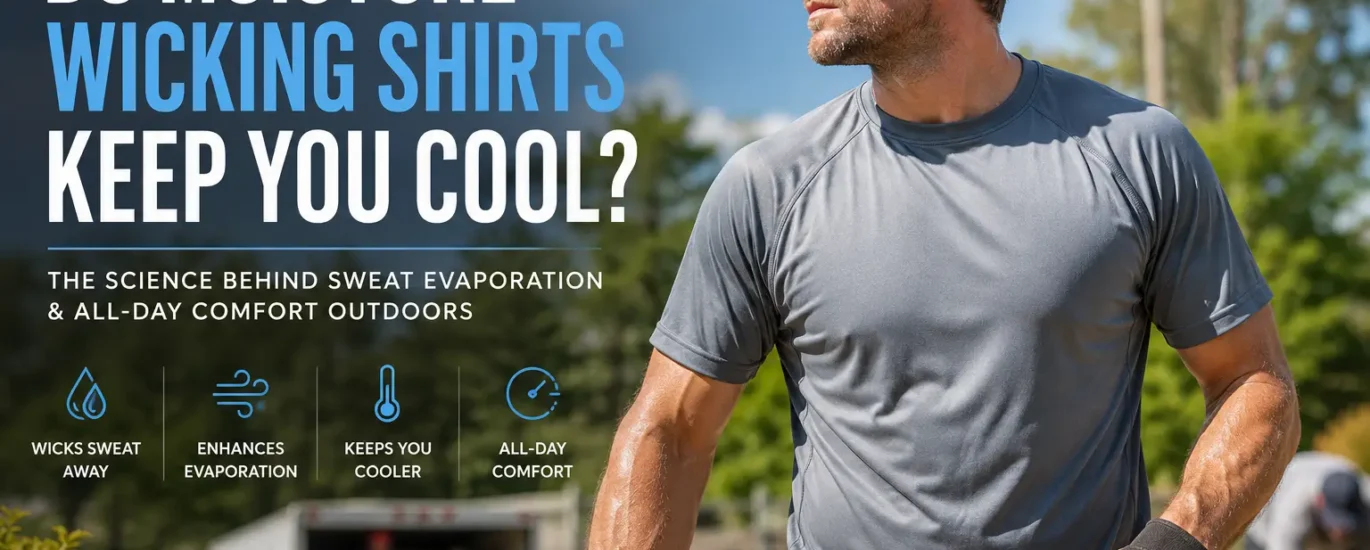
Do Moisture Wicking Shirts Keep You Cool?
The short answer: moisture wicking shirts can help improve comfort in hot conditions, but they work with your body’s cooling system rather than replacing it.
Your body already has a built-in cooling process sweating. When sweat evaporates off your skin, it carries heat away with it. The problem is that ordinary fabric, especially heavy cotton, tends to absorb sweat and hold onto it instead of helping it evaporate. That’s what leaves you feeling damp, heavy, and sticky by midday.
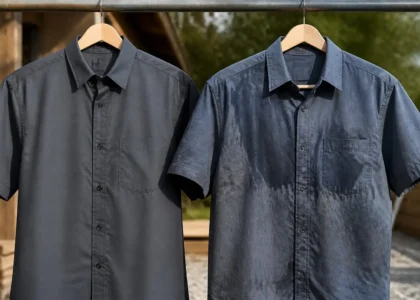
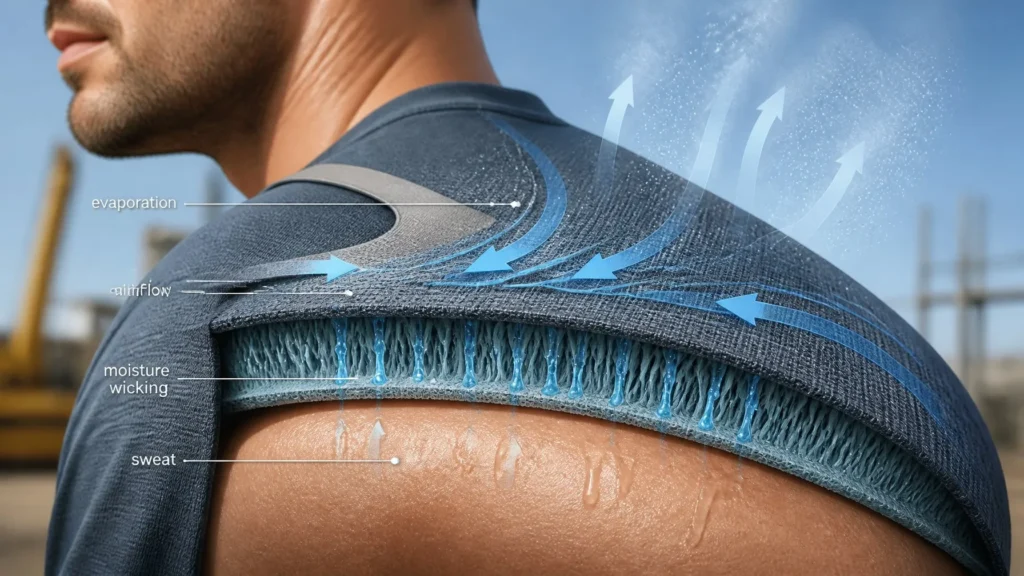
Moisture wicking fabric is built differently. It moves sweat away from your skin and spreads it across a larger surface area of the shirt. More surface area exposed to air means moisture can evaporate more efficiently. The result is a shirt that feels drier against your skin, even while you’re still sweating.
It’s important to be clear about what this does and doesn’t do. Moisture wicking shirts don’t prevent heat stroke, stop overheating, or lower your core body temperature on their own. What they do is support your body’s natural cooling process and reduce the discomfort that comes with trapped sweat which for most people working in the heat is a meaningful improvement.
How Do Moisture Wicking Shirts Work?
The process behind moisture wicking shirts is fairly simple once you break it down step by step:
- Your body produces sweat as part of its natural temperature regulation.
- The fabric’s fibers pull that moisture away from your skin through a process called capillary action tiny gaps between fibers act like channels that draw liquid outward, similar to how a paper towel soaks up a spill.
- The moisture spreads across the outer surface of the fabric instead of sitting in one wet patch.
- Airflow moves across that larger wet surface area.
- That airflow speeds up evaporation, which can improve how cool and dry you feel while you work.
This is why moisture wicking t shirts and moisture wicking polo shirts often feel lighter and less clingy than a soaked cotton shirt, even in similar conditions. The fabric isn’t magic — it’s just engineered to move moisture instead of trapping it.
Why Does Sweat Evaporation Help You Feel Cooler?
This is the part people often misunderstand. Sweat sitting on your skin doesn’t cool you down by itself. Cooling only happens when that sweat evaporates. As liquid sweat turns into vapor, it pulls heat energy from your skin, which lowers your skin’s surface temperature.
That means clothing plays a real role in this process. If your shirt traps sweat against your body instead of letting it evaporate, you lose much of that cooling benefit you’re just sitting in a wet shirt. If your shirt helps move sweat outward and lets air reach it, evaporation happens faster and more consistently, which is where the “cooling” feeling from wicking shirts actually comes from.
This is also why a breathable fabric matters as much as a wicking one. Wicking gets the moisture out of contact with your skin; breathability and airflow are what finish the job by helping it evaporate.
What Makes a Shirt Good at Wicking Moisture?
Not every shirt labeled “moisture wicking” performs the same way. A few factors determine how well a shirt actually manages sweat.
Fabric Type
Most sweat wicking shirts are made from polyester or polyester blends. Polyester fibers don’t absorb water the way cotton does instead, they move it along the fiber surface, which supports faster spreading and evaporation. Some blends add a small percentage of other fibers for softness or stretch, but the core wicking performance usually comes from the polyester content.
Breathability
A shirt can wick moisture well and still trap heat if the fabric construction blocks airflow. Look for a knit structure that allows air to pass through rather than a dense, tightly woven fabric that holds heat close to the body.
Quick-Drying Performance
Drying speed matters just as much as wicking. A shirt that pulls sweat to the surface but takes forever to dry will still feel damp. Good moisture wicking clothing is built to release that moisture into the air quickly, not just move it around.
Fit
Fit affects how much of the shirt actually touches your skin and how freely air can move underneath it. A shirt that’s too tight increases skin contact and traps heat; one that’s too loose can reduce the fabric’s ability to wick effectively where you need it most, like the back and underarms.
Lightweight Construction
For anyone doing physical work, a lightweight shirt reduces overall heat load and makes long shifts more manageable. Heavier fabrics, even wicking ones, add extra warmth that isn’t ideal for hot-weather labor.
None of this means every polyester shirt is automatically high-performance construction quality, weave, and finishing all affect how well a shirt actually wicks and dries in real conditions.
Are Moisture Wicking Shirts Better Than Cotton in Hot Weather?
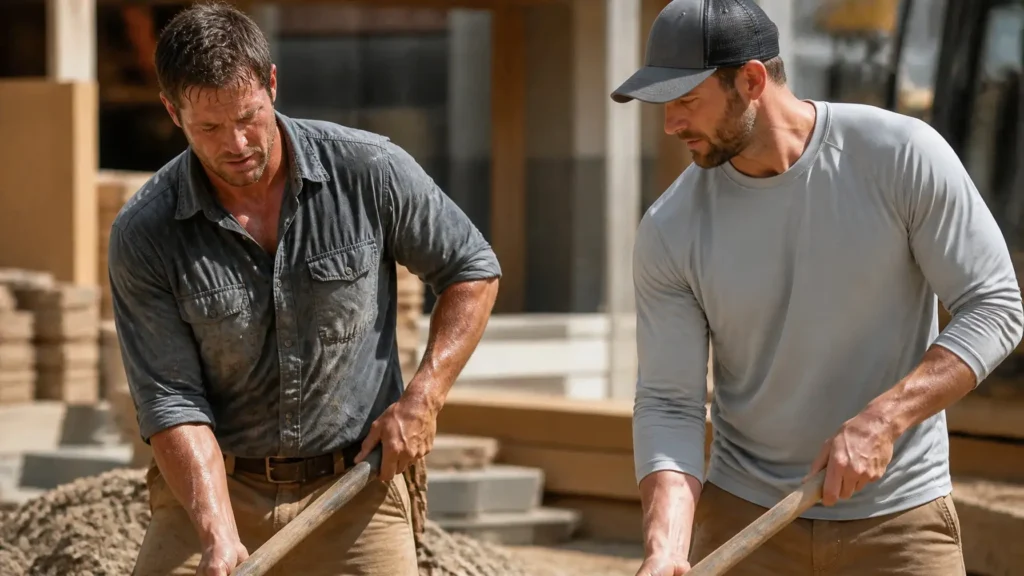
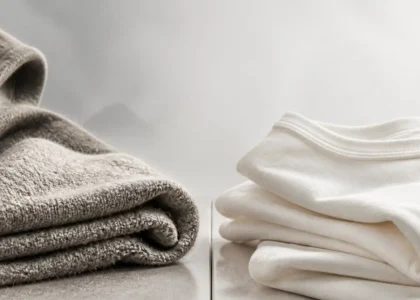
Cotton isn’t a bad fabric, and it’s still a comfortable, breathable choice for a lot of everyday situations. The difference shows up specifically when you’re sweating heavily for extended periods. Cotton absorbs moisture and holds onto it, which is why a cotton shirt can start to feel heavy and stay wet long after you’ve cooled down. Moisture wicking fabric is built to avoid that buildup.
| Feature | Moisture-Wicking Shirt | Cotton Shirt |
| Sweat Management | Moves sweat away from skin | Absorbs and holds sweat |
| Drying Speed | Fast | Slow |
| Wet Feeling | Minimal, spreads moisture thin | Noticeable, stays damp |
| Hot Weather Comfort | Generally more comfortable | Can feel heavy when soaked |
| Breathability | Depends on knit, often high | Naturally breathable when dry |
| Outdoor Work Suitability | Well suited for long, sweaty shifts | Better for lighter activity or cooler conditions |
For a deeper look at how these two materials compare on durability, feel, and long-term wear, our polyester vs cotton for work shirts guide covers the full breakdown. And if you’re weighing wicking fabric against a traditional work shirt more broadly not just cotton specifically our guide on moisture-wicking vs standard work shirts walks through that comparison in more detail.
Are Moisture Wicking Shirts Good for Outdoor Work?
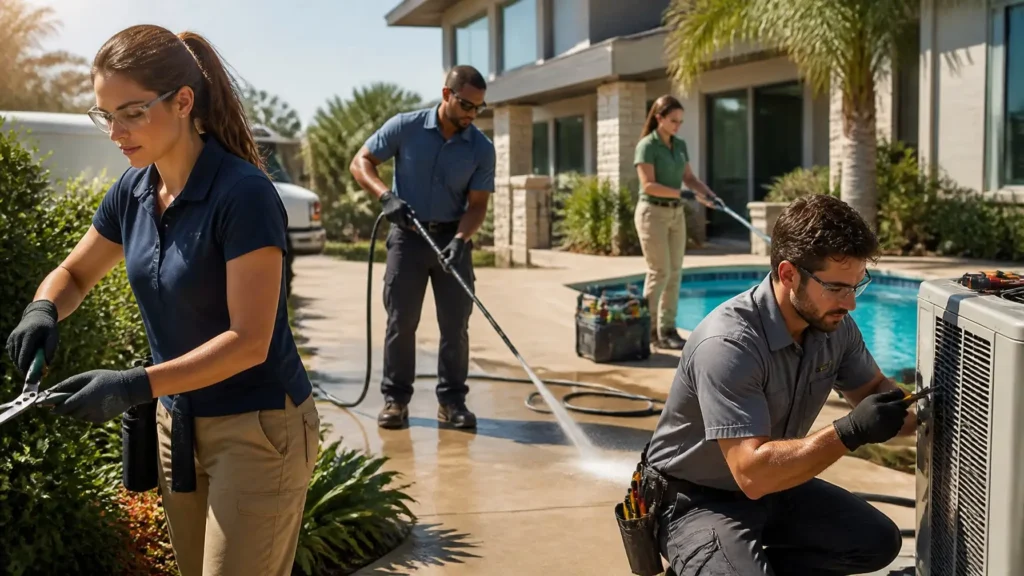
For people doing physical work outdoors, moisture management isn’t a minor comfort feature it affects how you feel by hour three of an eight-hour shift.
Landscaping and Lawn Care
Landscaping crews deal with prolonged sun exposure, constant movement, and physical exertion for hours at a time. A lightweight, moisture wicking shirt helps reduce that heavy, soaked feeling that builds up over a long workday, which matters when you’re on your feet from morning to afternoon. See our dedicated moisture-wicking lawn care shirts for options built around this kind of work.
Pressure Washing
Pressure washing combines outdoor heat, constant physical movement, and direct water exposure. Workers in this field need durable workwear that can handle both sweat and splashback, and in many cases, exposure to cleaning chemicals or diluted bleach solutions used in the job. That’s where chemical resistance becomes just as important as moisture control — a topic we’ll get into in the next section. Our moisture-wicking pressure washing shirts are built with that combination in mind.
Pool Service
Pool techs spend long stretches in direct heat while moving equipment and handling pool chemicals. A breathable, sweat wicking t shirt keeps them more comfortable during the physical parts of the job, while chemical exposure is a separate consideration for the fabric itself.
HVAC and Construction
These trades involve physical labor, long shifts, and often work in attics, mechanical rooms, or job sites with little airflow. Lightweight, cool wicking shirts can make a noticeable difference in comfort compared to standard heavier work shirts, especially during summer months.
Moisture Wicking vs Bleach Resistance: What’s the Difference?
This is a distinction worth understanding clearly, because the two terms get mixed up often.
Moisture wicking refers to how a fabric manages sweat pulling it away from your skin and helping it evaporate. It’s about comfort and temperature regulation during activity.
Bleach resistance refers to how well a fabric holds up against bleach and other harsh chemicals without fading, staining, or breaking down. It’s about durability and appearance over repeated exposure to chemical cleaning agents.
These are two separate performance features, and a shirt can have one without the other. A moisture wicking shirt with no bleach resistance can still discolor or degrade quickly if it’s regularly exposed to bleach-based cleaning products. A bleach-resistant shirt with no wicking properties might hold up fine against chemicals but leave you sweating through a heavy, non-breathable fabric.
For workers in industries like pressure washing, commercial cleaning, pool service, or other maintenance jobs where bleach and chemical exposure is routine, both features matter. You want a shirt that keeps you comfortable during physical work and holds up against the chemicals you’re working around every day. That’s the gap workwear built specifically to be both moisture-wicking and bleach-resistant is designed to fill moisture wicking alone doesn’t provide chemical protection, and bleach resistance alone doesn’t manage sweat.
Which Type of Moisture Wicking Shirt Should You Choose?
The right style depends on your work environment, temperature, and how your business wants its team to look on the job.
Moisture Wicking T Shirts
A solid choice for casual work environments or physically demanding jobs where simplicity and mobility matter more than a polished look.
Moisture Wicking Polo Shirts
A step up in appearance, useful for businesses that want a more professional or branded uniform look while still keeping the comfort benefits of wicking fabric.
Moisture Wicking Long Sleeve Shirts
Useful for workers who want extra arm coverage whether for sun protection, brush and debris protection in landscaping, or general job site safety without sacrificing breathability.
Moisture Wicking Collared Shirts
A good option for customer-facing roles where employees interact directly with clients, combining a professional appearance with practical comfort.
The best fit depends on your work environment, expected temperatures, activity level, how much coverage you need, and your company’s uniform or branding requirements.
How to Choose the Best Moisture Wicking Work Shirt
When comparing options, a simple checklist can help you avoid picking a shirt that looks the part but underperforms on the job:
- Fabric composition — polyester or polyester blend for wicking performance
- Breathability — knit construction that allows airflow
- Quick-drying performance — how fast the shirt releases moisture, not just moves it
- Fit — not too tight, not too loose, for proper airflow
- Durability — stitching and construction that hold up to regular wear and washing
- Sleeve length — short or long, based on job requirements
- Collar style — crew, polo, or button-up depending on the look you need
- Customization options — logo placement and branding capability
- Color — lighter colors tend to reflect more heat
- Work environment — outdoor heat, indoor mechanical spaces, or mixed conditions
- Chemical exposure requirements — whether bleach or chemical resistance is also needed for the role
Can Moisture Wicking Shirts Be Used as Custom Work Uniforms?
Comfort is only part of the equation for most businesses outfitting a team. Custom work uniforms also need to represent the company consistently same logo, same colors, same professional look across every employee, regardless of role or shift.
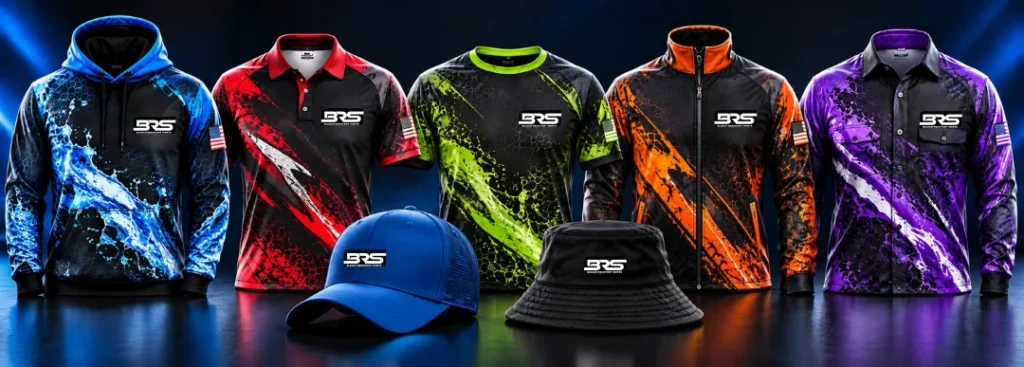
Moisture wicking fabric works well as a base for custom uniforms because it holds up to daily wear while keeping employees comfortable through long, physically demanding shifts. Businesses can apply logos and branding across multiple shirt styles t-shirts, polos, long sleeves, or collared shirts so the whole team looks consistent no matter which style fits their role best.
If your crew works in hot, physically demanding environments, choosing a moisture wicking work shirt that can also be customized for your business can provide both comfort and a professional appearance on the job.
Ready to build your team’s uniform? You can design your custom work shirt with your logo and branding applied to moisture-wicking, bleach-resistant styles suited for the work your crew actually does.
Frequently Asked Questions
Do moisture wicking shirts really keep you cool?
Yes, in a real but limited sense. Moisture wicking shirts move sweat away from your skin and help it evaporate faster, which improves how cool and dry you feel. They don’t lower your body temperature directly they support your body’s natural cooling process by making sweat evaporation more efficient.
How do moisture wicking shirts keep you cool?
They use fabric construction that pulls sweat away from your skin through capillary action, then spreads it across a wider surface area of the shirt. That larger, thinner layer of moisture is exposed to more airflow, which speeds up evaporation and helps you feel less damp and sticky during activity.
Are moisture wicking shirts good for hot weather?
Yes, moisture wicking shirts are generally well suited for hot weather, especially during physical activity. They help manage sweat buildup and support faster evaporation compared to fabrics that absorb and hold moisture, which can improve comfort during long hours outdoors.
Are moisture wicking shirts better than cotton?
For heavy sweating and extended outdoor work, moisture wicking shirts typically perform better than cotton because they don’t hold onto moisture the same way. Cotton remains a comfortable, breathable option for lighter activity, but it tends to feel heavy and stay wet longer once soaked with sweat.
What fabric is best for moisture wicking?
Polyester and polyester blends are the most common fabrics used for moisture wicking shirts. Unlike cotton, polyester fibers don’t absorb much water themselves, which allows moisture to move along the fiber surface toward the outer layer of the fabric where it can evaporate more easily.
Are moisture wicking shirts good for outdoor work?
Yes, they’re a strong option for outdoor work involving physical activity, such as landscaping, construction, HVAC, and pool service. The moisture management and lightweight construction help reduce the heavy, soaked feeling that builds up during long shifts in the heat.
Are moisture wicking shirts bleach resistant?
Not automatically. Moisture wicking and bleach resistance are two separate fabric performance features. A shirt can wick moisture well without offering any protection against bleach or chemical exposure, so workers who deal with both sweat and chemicals should look for workwear designed with both features specifically.
Do moisture wicking shirts dry quickly?
Generally, yes. Quick-drying performance is one of the core traits of well-made moisture wicking fabric, since the same properties that move sweat away from your skin also help the fabric release moisture into the air rather than holding onto it.
Final Thoughts
Moisture wicking shirts can genuinely help you feel cooler and more comfortable, particularly during physical work in hot conditions. The effect comes from how the fabric manages sweat: moving it away from your skin, spreading it across a larger surface, and speeding up evaporation, which is the actual mechanism behind feeling cooler.
Fabric type, breathability, fit, and drying speed all affect how well a specific shirt performs. And it’s worth remembering that moisture wicking and bleach resistance are different features solving different problems workers dealing with both sweat and chemical exposure, like pressure washing or pool service crews, often benefit from workwear built to handle both.
If you’re outfitting a landscaping, pressure washing, cleaning, or service crew, it’s worth choosing work shirts built for the actual conditions your team faces. Explore custom work shirts designed to keep your crew cool, comfortable, and looking sharp on the job.