
In industries where workers are regularly exposed to chemicals, heat, moisture, and heavy-duty operations, choosing the right fabric for uniforms is not just about comfort, it is about safety, durability, and performance. While cotton has long been a popular natural fabric, polyester shirts have increasingly become the preferred choice in chemical work environments.
This article explains why polyester outperforms cotton in such demanding conditions and why industries are shifting toward synthetic workwear solutions.
1. Superior Chemical Resistance
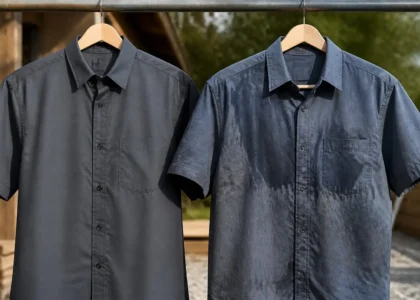
One of the biggest advantages of polyester is its resistance to many chemicals, acids, and alkalis.
Polyester is a synthetic fiber made from long polymer chains, giving it a stable molecular structure that does not easily react with most industrial substances. This makes it highly suitable for environments where exposure to cleaning agents, solvents, or mild corrosive chemicals is common.
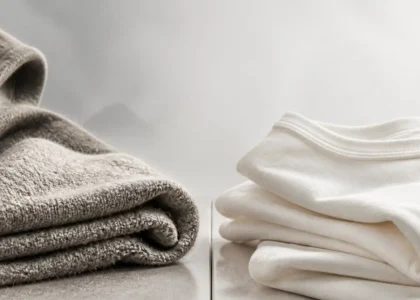
Cotton, on the other hand, is a natural cellulose fiber that tends to absorb liquids quickly, including chemicals. Once absorbed, these substances can remain trapped in the fabric, increasing the risk of prolonged skin exposure and fabric degradation.
In short:
- Polyester resists chemical absorption
- Cotton absorbs and retains chemicals
2. Moisture and Spill Resistance
In chemical work environments, spills are inevitable. Polyester provides a significant safety advantage due to its hydrophobic (water-repelling) nature.
Polyester fibers do not absorb moisture easily, allowing liquids to:
- Sit on the surface temporarily
- Evaporate or be wiped off quickly
- Avoid deep penetration into the fabric
Cotton behaves differently. It is highly absorbent, meaning:
- Spills soak in immediately
- Fabric becomes heavy and uncomfortable
- Chemicals may remain in contact with skin
This makes polyester a safer option for reducing exposure time during accidental spills.
3. Higher Durability in Harsh Conditions
Work environments involving chemicals often require repeated washing and exposure to harsh cleaning processes.
Polyester is significantly more durable because:
- It resists tearing and abrasion
- It maintains shape after repeated washes
- It does not shrink easily under heat or cleaning cycles
Research shows polyester workwear can last 2–3 times longer than cotton garments under industrial use conditions due to its strong synthetic fiber structure.
Cotton, by contrast, tends to:
- Weaken when wet
- Shrink after washing
- Wear out faster under frequent industrial laundering
4. Better Heat and UV Stability
Chemical environments are often combined with high heat or outdoor exposure.
Polyester performs well because:
- It resists UV degradation better than cotton
- It maintains structural strength under heat
- It does not degrade as quickly under sunlight exposure
Cotton fibers weaken faster in sunlight and can lose strength over time, making them less reliable for long-term industrial use.
5. Faster Drying and Reduced Downtime
In industries where uniforms may get exposed to liquids or cleaning processes, drying time matters.
Polyester:
- Dries quickly due to low moisture absorption
- Allows faster turnaround for reuse
- Reduces bacterial growth caused by damp fabric
Cotton:
- Holds large amounts of water
- Takes longer to dry
- Can remain damp for extended periods
This makes polyester far more practical for continuous industrial operations.
6. Improved Safety in Controlled Chemical Exposure
Modern polyester fabrics used in industrial uniforms can also be engineered for:
- Flame resistance
- Anti-static properties
- Chemical splash resistance coatings
This customization makes polyester adaptable for specialized environments such as:
- Laboratories
- Manufacturing plants
- Cleaning and sanitation industries
- Chemical handling units
Cotton lacks this level of engineered adaptability without heavy chemical treatment.
7. Lower Maintenance and Cost Efficiency
From a business perspective, polyester uniforms reduce long-term operational costs.
Benefits include:
- Less ironing required (wrinkle-resistant)
- Lower replacement frequency
- Reduced laundering costs due to durability
- Better color retention over time
Cotton uniforms often require more frequent replacement and maintenance, increasing overall cost per employee.
8. Limitations of Cotton in Chemical Work Settings
While cotton is comfortable and breathable, it has clear disadvantages in chemical environments:
- Absorbs liquids and chemicals easily
- Slower drying time increases exposure risk
- Shrinks and deforms with repeated washing
- Breaks down faster under harsh conditions
Because of these limitations, cotton is generally better suited for light-duty or low-risk environments rather than chemical-heavy workplaces.
Conclusion
In chemical work environments, performance and safety outweigh traditional fabric comfort. Polyester shirts outperform cotton due to their:
- Chemical resistance
- Moisture-repelling properties
- High durability
- Fast drying capability
- Low maintenance requirements
While cotton remains useful in general everyday wear, polyester stands out as the more reliable and protective fabric for industrial and chemical-related work conditions.
For industries prioritizing worker safety, operational efficiency, and long-lasting uniforms, polyester is clearly the superior choice.