Does bleach stain polyester? Yes, bleach can leave permanent faded patches, discoloration, or yellow marks on some polyester garments. However, the result depends on the fabric color, type of dye, bleach concentration, exposure time, printing method, and whether the garment is made from 100% polyester or a fabric blend.
Polyester can often handle chemical exposure better than many everyday cotton shirts, but that does not make every polyester garment bleach-proof. Regular colored polyester may still lose color, while specially manufactured bleach-resistant polyester is designed to maintain its appearance under more demanding working conditions.
Quick Answer
Bleach can discolor polyester, especially when concentrated chlorine bleach remains on colored fabric for too long. Dark colors usually show bleach marks more clearly because of the strong contrast, while white polyester may turn yellow if bleach is misused. Always check the care label because dyes, finishes, prints, and fabric blends react differently.
Does Bleach Actually Stain Polyester?
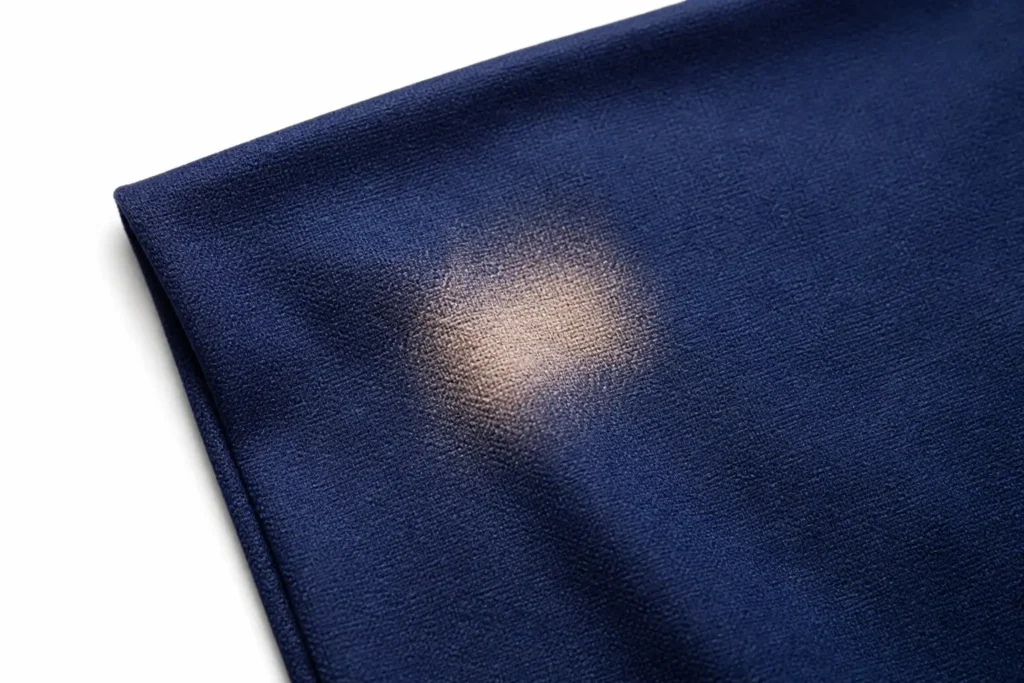
Bleach does not usually create a normal stain like oil, dirt, coffee, or grease. Instead, it can chemically change or remove the dye that gives the fabric its color.
This means a bleach mark on polyester is often a form of color loss, not a substance sitting on top of the shirt. Washing the garment may remove the remaining bleach, but it normally cannot restore dye that has already faded.
Many people use the phrase “bleach stain” when they’re actually referring to color loss or discoloration caused by chlorine bleach.
- A pale or faded patch
- An orange or rust-colored spot
- Uneven discoloration
- Yellowing on a white shirt
- A damaged logo or printed design
- A weak or rough area after repeated chemical exposure
Some washable and colorfast synthetic fabrics can be used with chlorine bleach when their care labels allow it. However, the garment’s color, treatment, and construction must also be bleach-safe.
Does Bleach Damage Polyester Fabric?
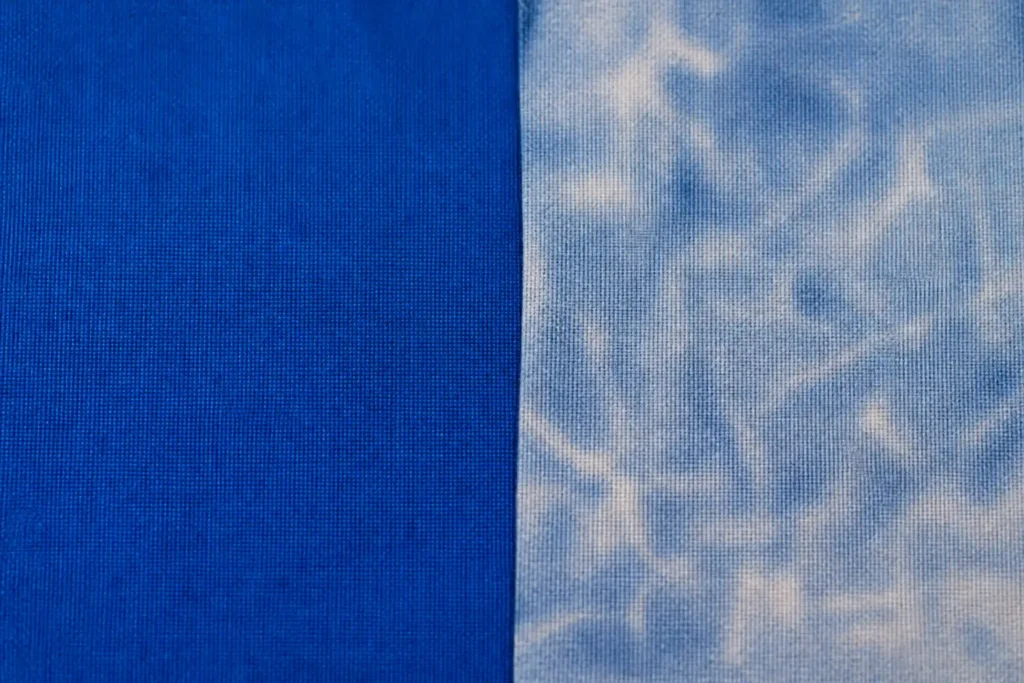
Bleach does not affect every polyester shirt in the same way.
A plain white 100% polyester shirt with a bleach-safe care label may tolerate correctly diluted laundry bleach. Clorox, for example, states that bleach-safe white 100% polyester shirts can be washed with chlorine bleach when the product directions are followed.
Colored polyester is more complicated. The polyester fiber may survive the exposure, while the fabric dye, printed design, protective finish, stitching, or blended fibers may react badly.
Workers who handle chlorine regularly often choose bleach-resistant uniforms designed for demanding work environments.
The risk increases when:
- Undiluted bleach is applied directly
- The bleach solution is too strong
- The shirt remains wet with bleach for a long time
- Exposure happens repeatedly
- The garment contains spandex or another sensitive fiber
- The fabric has a chemical or resin finish
- The shirt’s dye has poor chlorine colorfastness
- The care label says not to use chlorine bleach
Even a small amount of spandex in a polyester blend can change how the garment reacts. Chlorine bleach is not recommended for spandex because it can cause yellowing and material damage.
For this reason, check the full fabric composition. A shirt labeled “polyester” may not be made from 100% polyester.
Does Bleach Affect Colored Polyester?
Yes, bleach can affect colored polyester by changing or removing its dye.
However, bleach is not “attracted” to black, navy, red, or any other specific color. It reacts with chemical components in the dye and fabric.
The final result depends on:
- The original shade
- The type of dye
- Dye concentration
- Colorfastness
- Fabric treatment
- Bleach strength
- Contact time
- Temperature
- Printing method
- Fabric blend
Two polyester shirts that look like the same color can react differently because they may have been dyed, printed, or treated using different processes.
A hidden-area colorfastness test can help determine whether a colored garment is safe for a particular bleach product. If the test area changes color, the garment should not be washed with that bleach.
Which Polyester Colors Show Bleach Marks the Most?
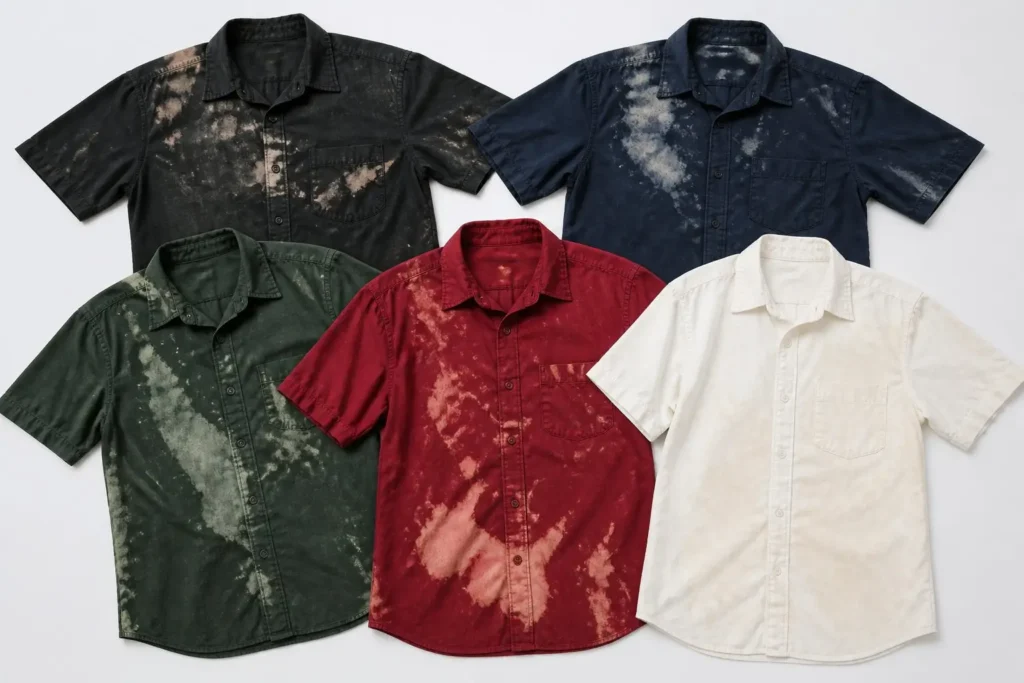
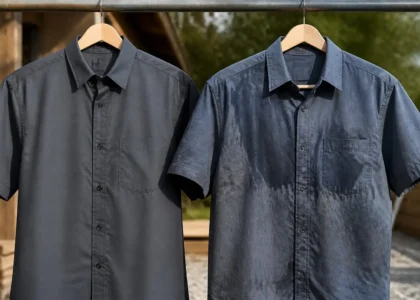
Dark and highly saturated colors usually show bleach marks more clearly. This is mainly because a light faded patch creates a stronger contrast against a dark background.
Light colors can also be affected, but the damage may be less visible.
| Polyester color | Possible visible result | How noticeable it may be |
| Black | Light, rust, orange, brown, or faded patch | Very noticeable |
| Navy blue | Pale blue, gray, pinkish, or uneven fading | Very noticeable |
| Dark green | Lighter green, yellowish, or faded area | Noticeable |
| Deep red | Pink, orange, or pale patch | Noticeable |
| Bright colors | Lighter shade or uneven color loss | Moderate to high |
| Pastel colors | Mild fading or pale discoloration | Low to moderate |
| Light gray | Lighter or yellowish patch | Moderate |
| White | Yellowing rather than color loss | Varies |
These are possible outcomes, not guaranteed reactions. The remaining color depends on which dye components break down first.
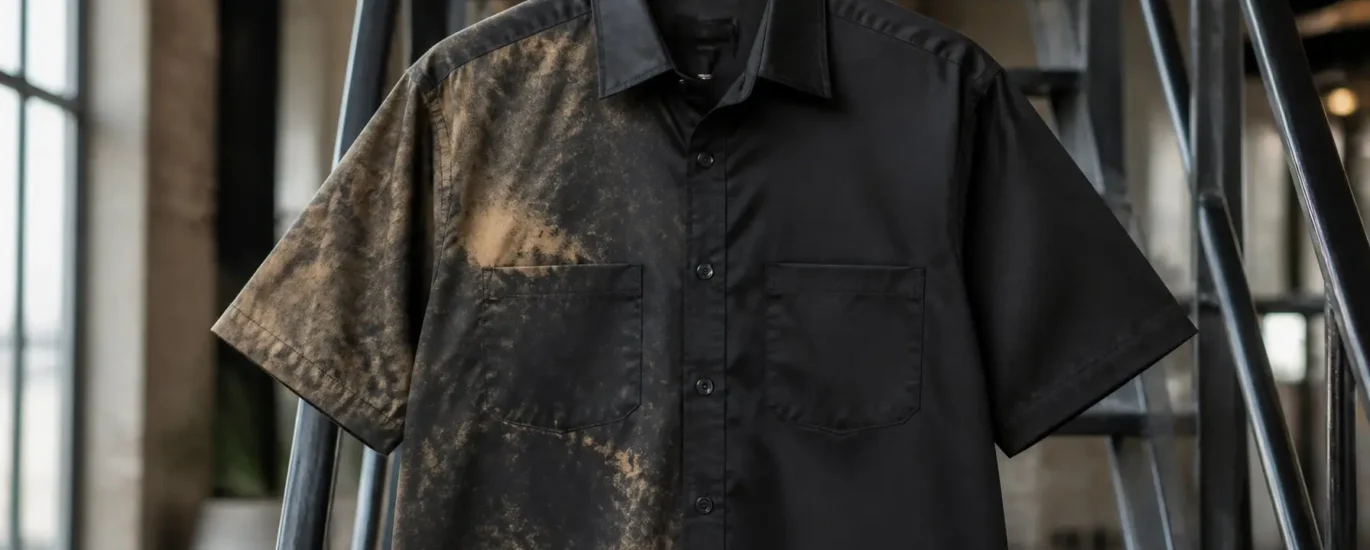
A black polyester shirt, for example, may contain several dye components that combine to create the final black shade. If bleach changes some components before others, the affected area may appear orange, reddish, brown, gray, or another unexpected color.
How Does Bleach Affect Black Polyester?
Bleach marks are often very noticeable on black polyester because of the contrast between the original black fabric and the faded area.
The mark may appear:
- Orange
- Rust-colored
- Brown
- Reddish
- Gray
- Pale or nearly white
The exact answer to “what color does bleach turn black polyester?” depends on the dye formula. There is no single color that every black polyester garment will become.
A small splash may create scattered dots. A larger spill may produce a faded patch with uneven edges. Prolonged exposure can make the damaged area more visible.
This is why regular black work shirts can quickly look worn when employees regularly handle sodium hypochlorite, chlorine cleaners, or pool chemicals.
What Happens to Navy, Red, and Dark Green Polyester?
Navy, red, and dark green polyester can also develop strong bleach marks.
On navy polyester, bleach may create a lighter blue, gray, purple, or pinkish area. Deep red may become pale red, pink, or orange. Dark green may become light green or yellowish.
However, these results cannot be predicted by color alone.
A high-quality, colorfast dye may resist visible changes better than a cheaper dye of the same shade. The fabric’s printing method and protective treatments also affect its performance.
Dark polyester colors are not always weaker than light colors. Their discoloration is simply easier to see.
Does Bleach Affect Light-Colored Polyester?
Bleach can still affect light-colored polyester, including beige, pastel blue, light gray, pale yellow, and light pink.
The faded area may not create the same sharp contrast seen on black or navy fabric, but chemical exposure can still cause:
- Uneven color
- Dull patches
- Yellowing
- Loss of brightness
- Damage to prints or logos
A bleach mark that is difficult to see does not mean the fabric has better polyester bleach resistance. It may only mean that the original color hides the contrast more effectively.
Does Bleach Turn White Polyester Yellow?
White polyester does not contain a dark dye that can leave an obvious faded patch. However, chlorine bleach can sometimes cause white garments to turn yellow.
Possible reasons include:
- Excessive bleach
- Undiluted product
- Incomplete rinsing
- High chemical concentration
- Sensitive fabric finishes
- Heat exposure
- Spandex in the fabric blend
- Reaction with body oils, minerals, or other substances
White garments containing spandex are especially vulnerable to yellowing when chlorine bleach is used. Chemical or resin-treated fabrics can also yellow or weaken after chlorine exposure.
Therefore, white does not automatically mean bleach-safe. Check the care label before using chlorine bleach on polyester.
What Determines Polyester Bleach Resistance?
Polyester bleach resistance depends on more than the name of the fiber.
1. Fabric composition
A 100% polyester shirt may react differently from a polyester-cotton or polyester-spandex blend.
The second fiber may be more sensitive to chlorine, heat, or repeated washing.
2. Dye quality
Colorfastness describes how well a fabric keeps its color when exposed to washing, light, rubbing, chemicals, or other conditions.
A high-quality polyester dye may retain its appearance better than a dye with poor chlorine resistance.
3. Bleach concentration
A small amount of diluted bleach is different from a direct splash of concentrated sodium hypochlorite.
Stronger solutions usually create a greater risk of visible color change.
4. Exposure time
A brief splash that is handled quickly may have a different result from a shirt that remains soaked in a chemical solution.
Long contact gives the chemical more time to react with dyes, finishes, prints, and blended fibers.
5. Printing method
Screen printing, heat-transfer vinyl, direct-to-garment printing, and dye sublimation place designs on or within fabric in different ways.
Surface prints may peel, crack, dissolve, or fade when exposed to harsh working conditions.
6. Fabric treatment
Some work shirts receive special treatments for color retention, moisture management, stain resistance, or chemical resistance.
The quality of these treatments affects how the garment performs over time.
7. Washing and drying
Repeated exposure to high heat, strong detergents, and unsuitable laundry chemicals can reduce the useful life of a polyester shirt.
Always follow the garment manufacturer’s care instructions.
Regular Polyester vs Bleach-Resistant Polyester
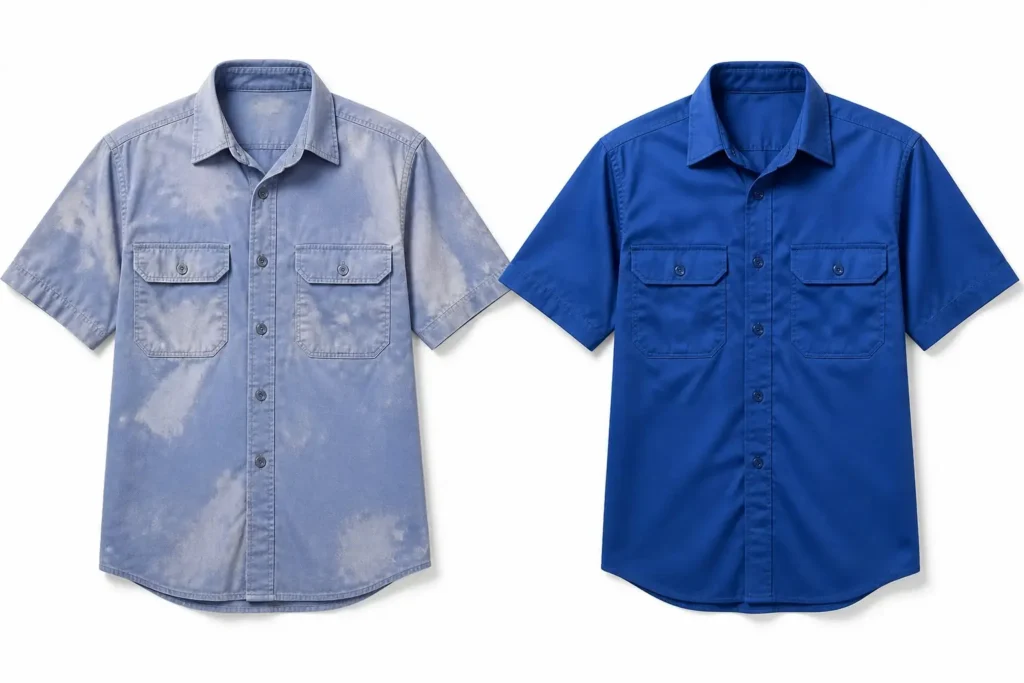
Not all polyester work shirts offer the same level of chemical resistance.
| Feature | Regular polyester shirt | Bleach-resistant polyester shirt |
| Intended use | Everyday wear or general sportswear | Cleaning, pressure washing, pool care, and chemical-exposed work |
| Color retention | Depends on dye and construction | Designed for improved resistance to visible fading |
| Bleach exposure | Results can be unpredictable | Better suited to occasional workplace splashes |
| Printing method | May use surface ink or vinyl | Often uses dye sublimation |
| Professional appearance | May fade after chemical contact | Designed to stay presentable longer |
| Performance claim | Varies by garment | Bleach-resistant, not bleach-proof |
A regular polyester sports shirt may be lightweight and quick-drying, but it may not use dyes or printing methods selected for bleach-exposed work.
Bleach-resistant polyester shirts are built with the work environment in mind. They are a more practical choice for crews that regularly handle cleaning chemicals but still need to look professional in front of customers.
Bleach resistance does not mean unlimited protection. Strong solutions, repeated soaking, poor garment care, and extended chemical contact can still affect the shirt.
Does Sublimation Printing Help Polyester Resist Fading?
Dye sublimation is commonly used for custom polyester workwear because the design becomes part of the polyester material rather than sitting on the surface like a thick ink layer or vinyl graphic.
This offers several practical benefits:
- The design does not peel like vinyl
- The print does not crack like some surface inks
- Logos can remain clear after repeated washing
- Full-color designs can cover large parts of the shirt
- Company colors and branding can be built into the garment
Sublimation printing itself does not make a shirt completely bleach-proof. However, it can reduce problems linked to exposed surface graphics because there is no raised print layer to peel away. Bleach Resistant Shirts describes its garments as 100% polyester, dye-sublimated, lightweight, breathable, and bleach-resistant rather than bleach-proof.
For pressure washing companies, pool cleaners, exterior cleaning crews, and sanitation teams, sublimated work shirts can provide a stronger balance of branding, comfort, and durability than basic printed cotton shirts.
Polyester vs Cotton Bleach Resistance
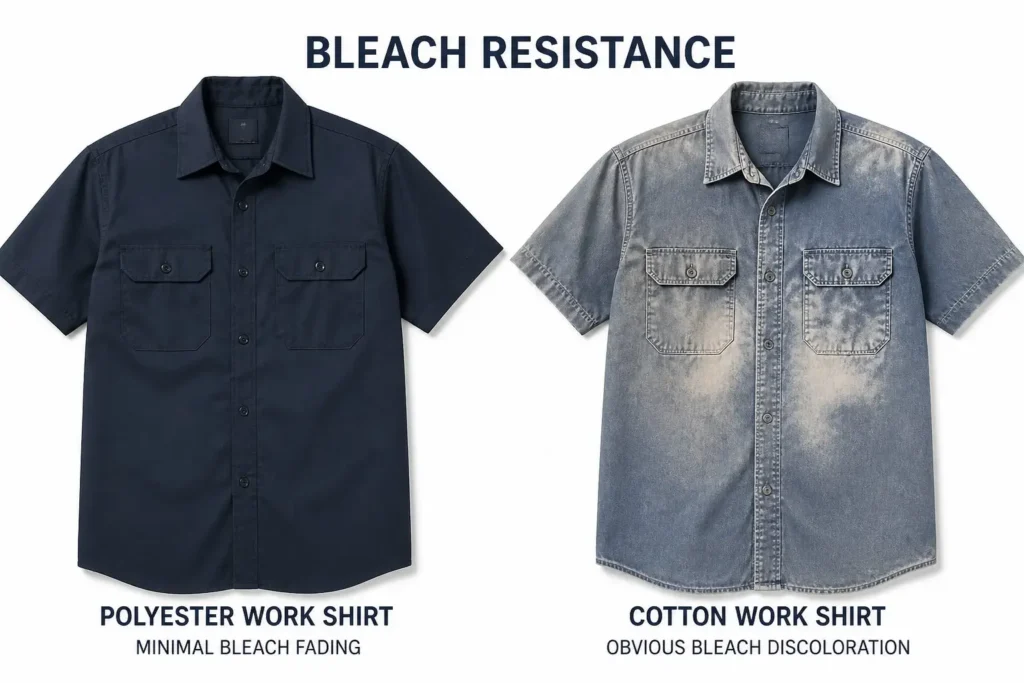
When comparing polyester vs cotton bleach resistance, neither fabric should automatically be treated as completely bleach-proof.
Cotton is a natural, absorbent fiber. It can absorb liquid quickly, allowing a bleach splash to spread into the material. Colored cotton often develops obvious pale or orange marks when its dye is removed.
Polyester absorbs less moisture than cotton and is often used in performance workwear. However, the dye, print, finish, and fabric blend can still discolor.
| Feature | Polyester | Cotton |
| Moisture absorption | Lower | Higher |
| Drying speed | Faster | Slower |
| Bleach reaction | Depends heavily on dye and blend | Colored fabric often shows clear dye loss |
| Sublimation compatibility | Excellent | Poor without special treatment |
| Workwear use | Lightweight, quick-drying uniforms | Comfortable everyday shirts |
| Chemical resistance | Can be improved through manufacturing | Often limited on standard colored shirts |
The best option for bleach-exposed work is not simply any polyester shirt. It is a garment specifically designed as bleach-resistant workwear.
Can You Bleach Polyester in the Washing Machine?
You may be able to bleach some polyester garments, but only when:
- The shirt is bleach-safe
- The care label allows chlorine bleach
- The garment does not contain spandex or another bleach-sensitive fiber
- The bleach is suitable for the item
- Product instructions are followed exactly
- The fabric is white or has passed a colorfastness test
Do not assume that every white or colored polyester shirt can be washed with chlorine bleach.
For colored polyester fabric, a color-safe, non-chlorine product may be more suitable, depending on the care label. Color-safe bleach usually uses peroxide rather than sodium hypochlorite and is intended for garments that cannot be washed with regular chlorine bleach.
Never pour undiluted chlorine bleach directly onto clothing unless the product label and garment instructions specifically allow that use.
Can Bleach Marks Be Removed From Polyester?
A true bleach mark normally cannot be washed out because the fabric’s color has already changed.
You may be able to stop additional damage by following the chemical product label, garment care instructions, and workplace handling procedures. However, washing will not restore dye that has been chemically removed.
Possible ways to improve the garment’s appearance include:
- Using a fabric-safe dye
- Applying a textile marker to a very small area
- Adding a patch
- Covering the area with embroidery
- Replacing the damaged shirt
Color repair may not match the original shade perfectly. It can be especially difficult on patterned, heathered, gradient, or sublimated shirts.
For professional crews, replacing visibly damaged uniforms is often the best way to maintain a clean brand image.
How to Reduce Bleach Marks on Polyester Work Shirts
Workers who regularly use chlorine bleach or sodium hypochlorite cannot always prevent every splash. However, the following steps may reduce visible damage.
Choose the right work shirt
Select bleach-resistant polyester work shirts made for cleaning, pool care, pressure washing, or exterior maintenance.
A regular fashion or sports shirt may not provide the same level of color retention.
Check the fabric blend
Look for 100% polyester when appropriate. Be cautious with polyester-spandex blends because chlorine bleach can damage spandex.
Follow the care label
The care label should guide washing, drying, ironing, and bleach use.
Do not rely only on the garment’s color or general fabric name.
Avoid direct concentrated exposure
Concentrated chemicals can create faster and more visible discoloration than properly handled diluted solutions.
Follow the product label and workplace safety procedures.
Handle splashes promptly
Follow the chemical manufacturer’s instructions, safety data sheet, and workplace response process after a spill or splash.
Do not experiment by mixing cleaning products.
Wash work shirts separately
Chemical-exposed uniforms may need to be separated from household clothing or delicate garments.
Follow the shirt manufacturer’s washing recommendations.
Avoid excessive heat
High heat can affect polyester fibers, finishes, and printed colors. Use the recommended wash and drying settings.
Test unfamiliar products
Before applying a laundry product to the full garment, test it on a hidden area when the care instructions recommend testing.
Important Bleach Safety Reminder
Never mix household bleach with ammonia, acids, or other cleaning products. Dangerous gases can be released.
The CDC advises users not to mix household bleach or disinfectants with other cleaners and to follow product safety directions.
Work shirts can help a team look professional, but they are not a replacement for required personal protective equipment. Follow the chemical label, safety data sheet, employer procedures, and applicable workplace requirements.
Are Polyester Shirts Good for Pressure Washing?
Polyester is a practical fabric for pressure washing shirts because it can be lightweight, quick-drying, breathable, and suitable for full-color sublimation.
Pressure washing crews often work outdoors in heat, moisture, sweat, dirt, and cleaning solutions. A heavy cotton shirt may absorb moisture and stay wet longer, while a performance polyester shirt can help move moisture away from the body and dry faster.
However, a basic polyester shirt is not automatically suitable for sodium hypochlorite exposure.
Professional pressure washing shirts should ideally offer:
- Bleach-resistant construction
- Lightweight polyester fabric
- Moisture-wicking performance
- Strong stitching
- Full-color sublimated branding
- Comfortable movement
- Easy-care washing
- Clear company logos
- Consistent crew appearance
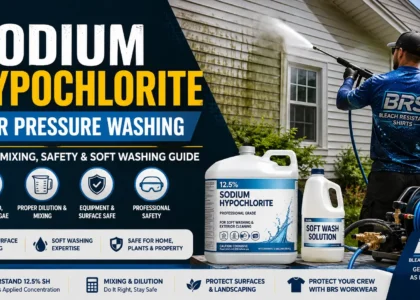
Bleach Resistant Shirts offers customized pressure washing shirts made from polyester with dye-sublimated designs and bleach-resistant positioning. The shirts are designed to help crews manage demanding work while maintaining a professional appearance.
Explore custom bleach-resistant pressure washing shirts designed for professional exterior cleaning crews.
What Shirt Color Is Best for Bleach-Exposed Work?
There is no single shirt color that bleach cannot affect.
Choosing a color should depend on both practical and branding needs.
Dark colors
Black, navy, dark green, and deep red can create a bold, professional look. However, a light bleach mark may be easier to notice.
Light colors
White, beige, light gray, and pastel shades may show less contrast after minor color loss. White can still yellow, and light colors may show dirt more easily.
Mixed patterns
Patterns, gradients, and multi-color sublimated designs may visually hide small marks better than one flat, solid shade.
However, the pattern does not provide chemical protection.
Brand colors
A work uniform should also match the company’s logo, vehicles, website, and marketing materials. A clear brand identity can be more valuable than selecting a shirt only to hide possible stains.
The most important factor is not the color itself. It is whether the garment uses suitable polyester, durable dyes, quality construction, and a printing method designed for the work environment.
How to Choose Bleach-Resistant Work Shirts
Before ordering bleach-resistant uniforms, ask the supplier these questions:
- Is the shirt made from 100% polyester?
- Is the garment bleach-resistant or fully bleach-proof?
- What printing method is used?
- Will the logo peel, crack, or sit on the surface?
- Is the fabric lightweight and moisture-wicking?
- Is the shirt intended for pressure washing or chemical-exposed work?
- Are custom colors and sizes available?
- What care instructions must be followed?
- Can I see a digital mockup before ordering?
- Is there a minimum order quantity?
Clear answers can help you compare custom pressure washing shirts more accurately and avoid buying ordinary polyester uniforms that are not designed for the job.
Final Verdict: Does Bleach Stain Polyester?
Yes, bleach can stain or discolor polyester, although the visible mark is usually permanent dye loss rather than a removable stain.
Dark polyester colors such as black and navy often show the strongest contrast. Light colors may hide minor fading, while white polyester can turn yellow when chlorine bleach is overused or applied to an incompatible fabric blend.
The result depends on the dye, colorfastness, bleach concentration, exposure time, fabric blend, treatment, and printing method. Regular polyester may offer some practical benefits, but it is not automatically suitable for chemical-exposed work.
For pressure washing, pool cleaning, exterior cleaning, and other demanding jobs, choose bleach-resistant polyester shirts designed to maintain a clean and professional appearance.
Keep your crew comfortable, consistent, and ready for the job. Request a free custom shirt mockup and create bleach-resistant uniforms featuring your company colors and logo.
Frequently Asked Questions
Does bleach stain 100% polyester?
Bleach can discolor colored 100% polyester by changing its dye. Some white 100% polyester garments may be washed with chlorine bleach when their care labels allow it. Always check the label because prints, dyes, finishes, stitching, and garment construction can affect bleach safety.
Does bleach damage polyester?
Strong, repeated, or prolonged bleach exposure can affect polyester dyes, prints, finishes, and blended fibers. A bleach-safe white polyester garment may tolerate correct laundry use, but that does not mean every polyester shirt can handle direct or concentrated exposure.
What color does bleach turn black polyester?
Black polyester may turn orange, rust, brown, red, gray, or a lighter shade. The exact result depends on the dye formulation. Bleach does not turn every black polyester shirt the same color.
Does bleach affect colored polyester?
Yes. Chlorine bleach can cause fading, uneven color, or permanent patches on colored polyester. Dark shades often show the effect more clearly, but light-colored polyester can also discolor.
Does bleach turn polyester yellow?
White polyester may yellow when too much bleach is used, when the product is applied incorrectly, or when the shirt contains bleach-sensitive fibers such as spandex. Certain chemical finishes can also react with chlorine bleach.
Is polyester more bleach-resistant than cotton?
Polyester can be a practical option for bleach-exposed work because it absorbs less moisture, dries quickly, and supports sublimation printing. However, actual resistance depends on the dye, finish, blend, and garment construction. Neither standard polyester nor cotton should be assumed to be bleach-proof.
Does bleach affect sublimation printing?
Sublimation places dye within polyester rather than creating a raised surface layer. This helps prevent peeling and cracking. However, strong bleach exposure can still alter the dye or fabric, so sublimated shirts should be described as resistant rather than completely bleach-proof.
Can bleach stains be removed from polyester?
A bleach stain usually cannot be washed out because the dye has been chemically changed or removed. Small marks may be covered with fabric dye, a textile marker, embroidery, or a patch, but exact color matching can be difficult.
What shirt colors hide bleach marks best?
Light colors and mixed patterns may make minor discoloration less obvious than solid black or navy. However, no color guarantees bleach resistance. The fabric, dye quality, printing method, and construction matter more than the shirt color alone.
Are bleach-resistant shirts completely bleach-proof?
No. Bleach-resistant shirts are designed to handle workplace exposure better than ordinary shirts, but concentrated chemicals, long exposure, repeated soaking, and incorrect care can still cause damage. Always follow the garment and chemical manufacturer’s instructions.