Commercial cleaning uniforms do more than give your team a consistent appearance. The right workwear helps employees stay comfortable during long shifts, supports a professional image, and makes your cleaning business easier for clients to recognize.
Whether you manage an office cleaning company, a janitorial service, a residential cleaning business, or a commercial property maintenance team, choosing the right uniforms requires more than picking a color and adding a logo. Fabric performance, fit, durability, washing requirements, and branding all matter.
The best commercial cleaning uniforms are comfortable enough for daily work, practical for the cleaning tasks your employees perform, easy to maintain, and consistent with your company’s identity.
In this guide, you’ll learn how to choose cleaning company uniforms, which shirt styles work for different teams, what to look for in a fabric, and how custom-branded work shirts can help your business present a more professional image.
What Are Commercial Cleaning Uniforms?
Commercial cleaning uniforms are work clothes designed for employees who clean offices, retail stores, commercial buildings, schools, hospitality properties, and other professional spaces.
They commonly include T-shirts, polo shirts, work pants, tunics, lightweight jackets, and other garments suited to the employee’s role and working environment.
Unlike ordinary casual clothing, professional cleaning workwear needs to balance several practical requirements:
- Comfort: Employees need clothing that allows them to bend, stretch, reach, and move throughout a shift.
- Durability: Work garments should withstand regular wear and repeated laundering.
- Easy maintenance: Fabrics should be appropriate for the cleaning products and washing methods used by the business.
- Professional appearance: Consistent colors and company branding help staff look organized and identifiable.
- Practicality: Garments should suit the actual cleaning tasks, temperature, and environment.
For cleaning companies, the best uniform is one that supports employees’ daily work while presenting a consistent brand image to customers.
Why Do Professional Cleaning Uniforms Matter?
Uniforms may seem like a small business detail, but they influence how a team looks, feels, and operates.
1. Create a Professional First Impression
When a cleaning team arrives at an office or commercial property, clients notice how the employees present themselves. Clean, coordinated uniforms help the team appear organized and prepared for the job.
Branded clothing also makes it easier for property managers and customers to identify authorized cleaning staff.
2. Build Brand Recognition
A company logo, consistent color scheme, and clearly designed shirts help customers associate your team with your business.
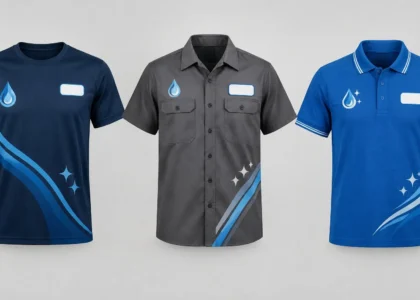
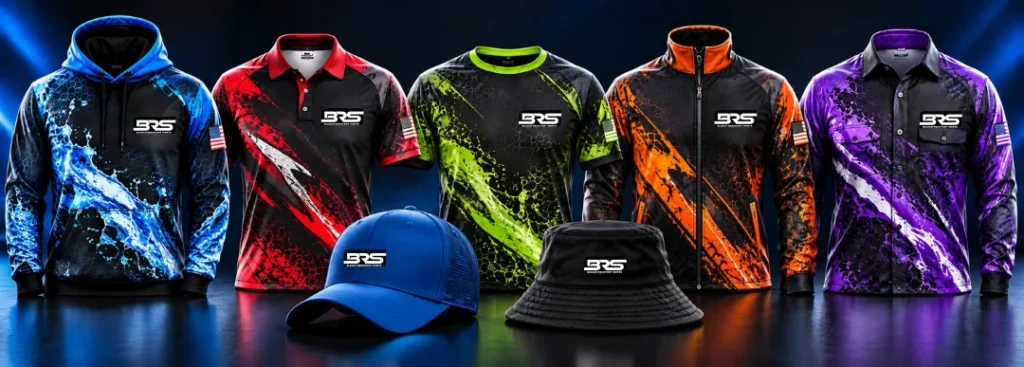
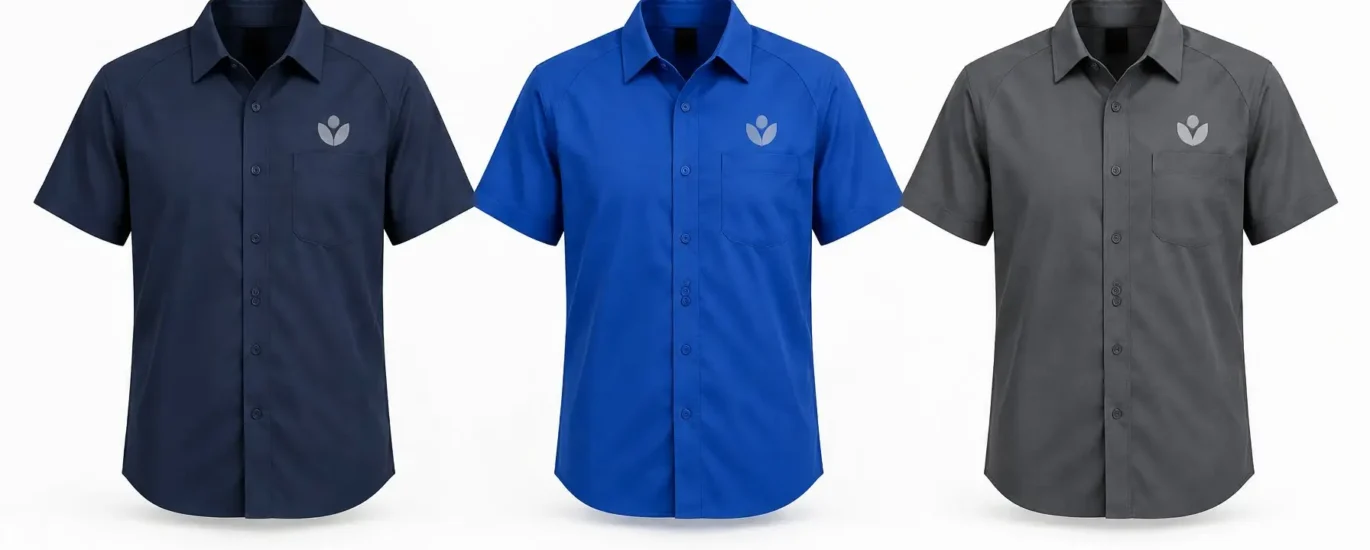
For example, a navy shirt with a contrasting logo can create a different visual identity from a bright blue performance shirt with a large back graphic. The right choice depends on your company’s brand and the environment in which your team works.
For cleaning businesses that operate across multiple client locations, consistent uniforms help maintain the same visual identity from one site to another.
3. Support Employee Comfort
Cleaning work often involves vacuuming, wiping surfaces, moving supplies, reaching overhead, and spending hours on your feet. Restrictive or heavy clothing can make these tasks less comfortable.
Lightweight shirts, suitable fits, and breathable fabrics can help employees manage physical work more comfortably, especially in warm environments.
4. Make Uniform Management Easier
Standardized uniforms simplify purchasing, staff onboarding, and replacement planning. Managers can maintain consistent colors, sizes, and branding rather than relying on employees to choose their own work clothes.
Ordering a suitable rotation of shirts also allows employees to wear clean uniforms while others are being washed.
How to Choose the Best Commercial Cleaning Uniforms
Before purchasing uniforms for your team, consider the type of cleaning work, the working environment, and how often the garments will be washed.
1. Choose the Right Fabric
Fabric affects comfort, drying time, appearance, and maintenance. No single material is best for every cleaning business.
Polyester
Polyester is commonly used in performance workwear because it can retain its shape, dry relatively quickly, and support vibrant printed designs. Moisture-wicking polyester fabrics can help move perspiration away from the skin when designed for that purpose.
For active cleaning crews, lightweight performance polyester may be a practical choice.
Cotton
Cotton is known for its soft feel and breathability. However, depending on the garment construction and care instructions, cotton shirts may shrink, wrinkle, or fade over time.
Cotton can work well for teams that prioritize a natural fabric feel, provided the garment suits the job and washing routine.
Polyester-cotton blends
Polyester-cotton blends combine properties of both fibers. Depending on the blend ratio and construction, they can offer a balance of comfort, shape retention, and everyday practicality.
When comparing fabrics, consider the actual garment specifications rather than assuming that every polyester shirt or cotton blend will perform identically.
2. Look for Breathability and Moisture Management
Cleaning employees can become warm while vacuuming, mopping, moving equipment, or working in poorly ventilated spaces.
Breathable fabrics and moisture-wicking construction may improve comfort during physically demanding shifts. These features are particularly useful for teams working in warm buildings, outdoor areas, or environments without reliable climate control.
Remember that moisture-wicking and breathability are related but different properties. Moisture-wicking fabric helps move sweat away from the skin, while breathability describes how readily air and water vapor pass through a material.
3. Consider Durability and Frequent Washing
Cleaning uniforms may be washed more frequently than ordinary everyday clothing. Repeated washing can affect color, fit, seams, and printed graphics.
Before choosing uniforms, check:
- Whether the garment is suitable for frequent laundering.
- Whether the fabric retains its appearance with the recommended care.
- Whether the seams and construction suit the expected level of wear.
- Whether the logo printing method is compatible with the garment and washing instructions.
- Whether replacement shirts can be ordered in matching colors and styles.
If you are ordering uniforms for a large crew, testing a sample through your normal wash routine can help you evaluate the garment before committing to a larger order.
4. Choose a Comfortable, Practical Fit
Cleaning employees need freedom of movement. Shirts that pull across the shoulders, restrict arm movement, or fit too tightly can become uncomfortable during repetitive tasks.
Look for a fit that allows employees to reach, bend, stretch, and work without constant adjustment.
If your team includes employees with different body types, review the size chart and available cuts before placing an order. Ask staff for feedback when possible, especially if uniforms will be worn throughout long shifts.
5. Match the Uniform to the Work Environment
An office cleaning team may have different requirements from a crew cleaning warehouses, retail spaces, or outdoor commercial properties.
Consider the following factors:
- Indoor office cleaning: Lightweight shirts, a neat appearance, and easy-care fabrics.
- Commercial janitorial work: Durable garments suited to frequent movement and regular laundering.
- Outdoor cleaning: Breathable clothing and weather-appropriate layers.
- Specialized chemical cleaning: Garments selected according to the chemicals, exposure risks, and applicable safety requirements.
Standard work shirts should not be treated as chemical protective equipment. Where cleaning tasks involve hazardous chemicals or splash risks, follow product safety data sheets, workplace risk assessments, and applicable PPE requirements.
Which Types of Cleaning Company Uniforms Should You Choose?
The best uniform style depends on the appearance you want, the tasks your employees perform, and the conditions in which they work.
Custom Cleaning T-Shirts
Custom cleaning T-shirts are a practical option for everyday cleaning crews. They offer a casual, approachable appearance and work well for businesses that want simple, recognizable uniforms.
Consider performance shirts when employees need lightweight clothing for active shifts. You can customize the design with your company logo, brand colors, or other relevant business details.
Polo Shirts for Cleaning Businesses
Polo shirts provide a more structured appearance than basic T-shirts. They may suit cleaning companies that regularly interact with office managers, property owners, or commercial clients.
A polo with a small chest logo can create a clean, understated look. Pairing consistent shirts with appropriate work trousers helps maintain a coordinated team appearance.
Long-Sleeve Cleaning Work Shirts
Long-sleeve shirts may be useful in cooler environments or when a company prefers additional clothing coverage.
Choose a fabric and fit that remain comfortable during physical work. Long sleeves alone do not provide reliable protection against chemical splashes, heat, or other workplace hazards.
Performance Work Shirts
Performance shirts are worth considering for active cleaning crews and employees who work in warm conditions.
Depending on their construction, they may offer lightweight fabric, moisture management, and quick-drying properties. These features can support comfort during demanding shifts.
For companies interested in custom performance workwear, explore custom work shirts for cleaning and maintenance teams and select a style that matches your team’s requirements.
Hi-Vis Workwear for Relevant Tasks
Some cleaning and maintenance employees work around vehicles, loading areas, parking facilities, or other locations where visibility is important.
Where required, choose high-visibility garments that meet the applicable workplace standards. An ordinary bright-colored shirt is not automatically compliant high-visibility protective clothing.
For relevant outdoor and maintenance crews, review hi-vis work shirt options and verify the garment’s specifications before purchase.
Why Custom-Branded Cleaning Uniforms Are Worth Considering
Custom cleaning uniforms allow businesses to create a consistent appearance rather than relying on generic clothing.
The right design can communicate your company’s identity without making the shirt unnecessarily complicated.
Add Your Company Logo
A company logo helps customers identify employees and connect the uniform with your business.
Before approving a design, check that the logo is readable at the intended size and works against the shirt’s background color. High-contrast combinations are often easier to recognize from a distance.
Use Consistent Brand Colors
Choose colors that match your business identity and suit the work environment. Darker colors may help disguise some everyday dirt, but they do not eliminate staining or chemical damage.
If your business already uses specific colors on its website, vehicles, or marketing materials, carrying those colors into your uniforms can create a more consistent brand experience.
Make Contact Information Easy to Read
Depending on the design and your business needs, you may want to include a website, company name, or phone number.
Keep the layout readable and avoid crowding the shirt with too much information. A clear company name and well-placed logo are often more effective than a design with multiple competing elements.
Consider Sublimation Printing
Sublimation printing is a method used to transfer dye into compatible materials, commonly polyester fabrics. It can produce detailed graphics and vibrant colors across suitable garments.
For businesses that want custom-designed performance shirts, sublimation can offer considerable design flexibility. However, its suitability depends on the garment material and construction, so confirm the available printing options with your supplier.
To see how different uniform designs can be planned, visit Design Now.
Are Bleach-Resistant Shirts a Good Choice for Cleaning Crews?
Cleaning companies may use products containing bleach or other chemicals, but the right clothing depends on the specific exposure and garment.
Bleach-resistant shirts can be worth considering when a crew needs workwear designed to better withstand certain everyday conditions. However, bleach-resistant does not mean bleach-proof, and performance varies by fabric, printing process, concentration, contact time, and care routine.
If your team regularly handles bleach-based cleaning products:
- Review the product’s safety data sheet and workplace procedures.
- Select clothing appropriate for the actual exposure risk.
- Follow the garment manufacturer’s washing and care instructions.
- Avoid assuming that a printed shirt or performance fabric provides chemical protection.
- Use appropriate chemical-resistant PPE whenever the task requires it.
For businesses that need branded shirts for demanding cleaning environments, bleach-resistant work shirts may be an option to evaluate alongside the relevant product specifications.
The key is to select uniforms based on verified garment performance rather than relying on a marketing label alone.
How to Keep Commercial Cleaning Uniforms Looking Professional
Even a well-made uniform needs appropriate care. Establishing a simple laundry routine can help your team maintain a consistent appearance.
Follow the care label. Check the recommended washing temperature, detergent guidance, drying instructions, and any restrictions on bleach or other additives.
Separate garments when necessary. Sorting by color and soil level can help prevent color transfer and improve laundry management.
Avoid excessive heat. High temperatures may damage certain fabrics, shrink garments, or affect printed designs. Use the temperature recommended by the manufacturer.
Treat stains appropriately. Follow the garment’s care guidance and use a compatible stain treatment. Test products as recommended before applying them to an entire garment.
Inspect shirts regularly. Check for worn seams, damaged graphics, discoloration, and changes in fit. Replace garments when they no longer meet your team’s appearance or performance requirements.
Maintain a uniform rotation. Providing enough shirts for the work schedule helps employees wear clean garments while used ones are being laundered.
How Much Should a Business Budget for Cleaning Uniforms?
The total cost of commercial cleaning uniforms depends on more than the price of an individual shirt.
When comparing suppliers, consider the following:
- Garment cost: The price of each shirt or uniform set.
- Customization: Logo printing, design setup, or other customization charges.
- Order quantity: Whether the supplier offers flexible quantities or volume-based pricing.
- Shipping: Delivery charges and estimated arrival times.
- Replacement costs: How frequently the garments may need to be replaced.
- Care requirements: The time and expense associated with maintaining the uniforms.
- Consistency: Whether matching styles and colors can be reordered when your team grows.
A lower-priced shirt may not be the most economical option if it wears out quickly or fails to meet the team’s requirements. Equally, a premium garment is not automatically worth the extra cost if its features do not benefit your particular operation.
Compare the complete cost of ownership and request a sample or clear product specifications when possible.
Commercial Cleaning Uniform Checklist Before Ordering
Use this checklist to evaluate your next uniform order.
- The fabric suits the cleaning tasks and working environment.
- The shirts offer a comfortable fit and sufficient freedom of movement.
- The garment can be washed according to the team’s normal laundry routine.
- Logo placement and brand colors have been approved.
- Available sizes cover the employees who need uniforms.
- Printing and fabric-care requirements are clearly documented.
- Delivery timelines and any setup fees have been confirmed.
- Chemical exposure and workplace PPE requirements have been assessed.
- The budget accounts for replacements and additional staff.
- The supplier can explain the garment’s features and limitations.
Completing these checks before ordering can help avoid unsuitable garments, unclear costs, and unnecessary replacements.
Frequently Asked Questions
What are the best uniforms for commercial cleaning companies?
The best uniforms depend on the team’s duties, working conditions, and budget. Lightweight T-shirts or performance shirts may suit active crews, while polo shirts can provide a more structured appearance for customer-facing staff. Prioritize comfort, durability, suitable care instructions, and appropriate branding.
Which fabric is best for cleaning staff uniforms?
Polyester, cotton, and polyester-cotton blends can all be suitable for different needs. Polyester performance fabrics may offer moisture management and quick drying, cotton provides a familiar soft feel, and blends can balance several everyday properties. Compare the specific garment rather than choosing by fiber name alone.
Should cleaning company uniforms have a logo?
A logo is not essential, but branded uniforms can help customers identify employees and maintain a consistent business identity. Choose readable logo placement, appropriate contrast, and a design that reflects your company’s existing branding.
Are bleach-resistant shirts completely bleach-proof?
No. Bleach-resistant does not mean bleach-proof. Resistance varies by garment, material, dye, printing process, and exposure conditions. Follow the product specifications and workplace safety guidance, and do not use ordinary work shirts as a substitute for required chemical-protective clothing.
How many uniforms should a cleaning employee receive?
The appropriate quantity depends on shift frequency, laundry access, working conditions, and how quickly garments become soiled. Many businesses plan a rotation so employees have clean shirts available while used garments are being washed. Determine the quantity based on your actual schedule and replacement needs.
How can cleaning uniforms be kept from fading?
Follow the garment’s washing instructions, use suitable detergents, avoid excessive heat, and follow any restrictions on bleach or stain treatments. The best care routine depends on the fabric and printing method, so check the manufacturer’s guidance before laundering custom shirts.
Can small cleaning businesses order custom uniforms?
Ordering requirements vary by supplier. Some offer flexible quantities, while others require minimum orders or charge setup fees. Confirm the minimum quantity, customization options, design costs, and delivery timeline before placing an order.
What should I look for when buying custom cleaning shirts?
Check fabric performance, fit, size availability, print quality, washing requirements, logo placement, total cost, and delivery expectations. If the shirts will be exposed to cleaning chemicals, also verify their limitations and whether additional protective equipment is required.
Choose the Right Commercial Cleaning Uniforms for Your Team
The best commercial cleaning uniforms balance comfort, durability, practical care requirements, and professional branding. The right choice depends on the work your employees perform, the conditions they face, and how your business wants to present itself to clients.
Start by identifying your team’s daily needs, compare suitable fabrics and shirt styles, and confirm the customization and care requirements before ordering.
If you’re ready to explore custom-branded work shirts for your cleaning business, visit Design Now to review available styles and design options. You can choose a direction that fits your brand and create a consistent appearance for your team.